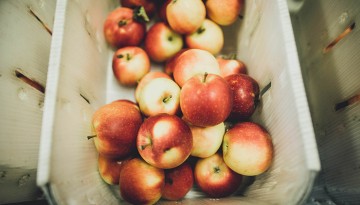
This fall, Cornell AgriTech's Hudson Valley Research Laboratory donated 47,000 pounds of apples and pears to help the more than 40,000 people in need of food assistance in the Hudson Valley region.
Several sites at Cornell Botanic Gardens honor members of the Cornell community, who served in the U.S Armed Forces, and it is among the many enduring acknowledgements of veterans across the Cornell campus.
Christopher Morrison Pierce, M.S. ’19, a doctoral candidate in physics, and Brennan Hyden, a doctoral candidate in plant breeding, have been chosen for the Office of Science Graduate Student Research Program.
The “One Health” approach is perfectly suited to tackling the COVID-19 pandemic, the most serious public health crisis in recent history, Cornell researchers said during the university’s COVID-19 Summit, a virtual event held Nov. 4-5.
Thanks to $1 million in new grants, Cornell scientists will model adding reflective aerosols into the stratosphere, which may deflect enough sunbeams to reduce Earth’s temperature and limit climate change.
Smart drones that distribute beneficial insects on crops, packaging materials to extend the shelf life of bread – these are a couple of the innovations to be featured at the virtual Grow-NY Food and Ag Summit, Nov. 17-18.
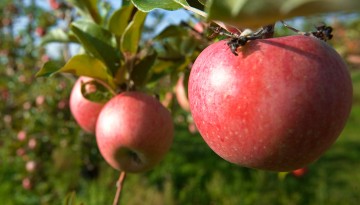
A Cornell-led, multi-institution, interdisciplinary team seeks to use computer vision, automation and robotics to optimize per-tree apple production, which is currently a highly manual and imprecise process.
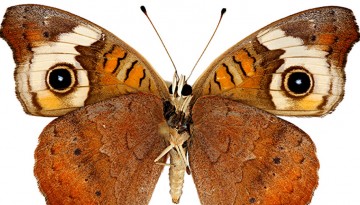
Cornell researchers have identified three genes responsible for changing the color of common buckeye butterfly wings, depending on what time of year the egg hatches and larvae develop.
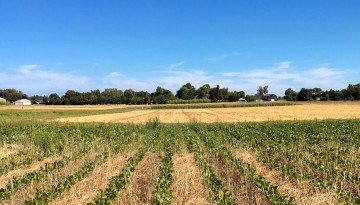
Organic crop farmers in the Northeast and Upper Midwest are facing an increasing number of challenges related to climate change and invasive pests, but a $2 million grant from the USDA will help them find sustainable solutions.