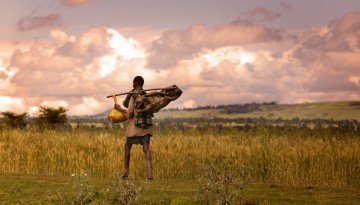
Ceres2030, a global effort led by International Programs in the College of Agriculture and Life Sciences, is employing machine learning, librarian expertise and cutting-edge research analysis to use existing knowledge to help eliminate hunger by 2030.
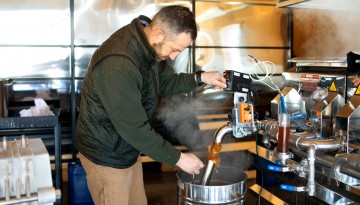
From maple syrup to apple cider to goat's milk soap, New York farms are growing sales in partnership with Cornell Cooperative Extension and Taste NY stores across the state.
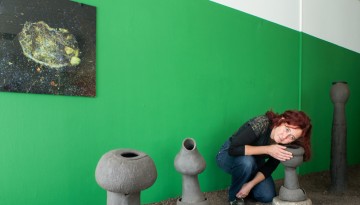
Research projects investigating the sounds of soil bring the fields of soil science, art, bioacoustics, entomology and other disciplines together, and blend creative practice with scientific inquiry.
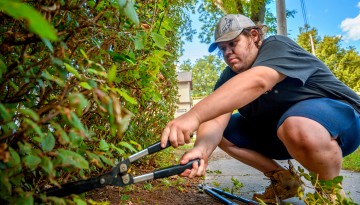
Rochester neighborhood reaps benefits of Cooperative Extension initiative run through Master Gardener Program and fueled by trained volunteers who provide research-based support to the public.
With a grant of $2,355,000 over five years, Marcos Simoes-Costa, assistant professor of molecular biology and genetics, will investigate how the spatial complexity of an organism is generated in early development.
The Department of Global Development will draw from faculty across the College of Agriculture and Life Sciences to create a unified development studies program.
Bailee Hopkins-Hensley ’18, MPS ’19, is passionate about exploring the connections that humans have to plants – especially the connections that indigenous communities have to the species that sustain them.
With a pinch of pomp and circumstance, Cornell’s McGovern Center life sciences business incubator recently graduated two companies – Bactana Corp. and Conamix.
Eight faculty members are recipients of 2019 Louis H. Zalaznick Teaching Assistantships, receiving funds of $1,500 to $3,000 to help develop or expand courses and add teaching assistants.