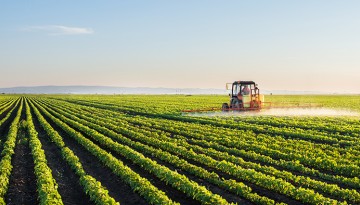
The USDA and the NSF have awarded a three-year, $2.4 million grant to a team of Cornell researchers who will study how ag-to-energy land-use conversions could impact food production.
Biodegradable plastics, drone-powered pollination and revolutionary indoor farming techniques are just a few of the innovations that will be on display at the Grow-NY Food and Ag Summit, Nov. 12-13 at the Rochester Riverside Convention Center.
The health of Earth’s oceans is rapidly worsening, and newly published Cornell-led research has examined changes in reported diseases across undersea species at a global scale over a 44-year period.
The Tata-Cornell Institute for Agriculture and Nutrition has been awarded a $1 million grant from the Walmart Foundation to assess challenges facing small-farm aggregation models in India and Mexico.
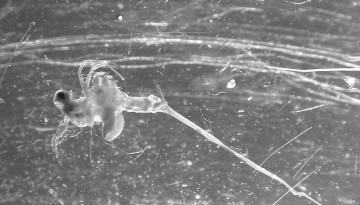
The nasty, predatory spiny water flea was discovered Sept. 16 in Oneida Lake by a Cornell student at the Cornell Biological Field Station at Shackelton Point in Bridgeport, New York.
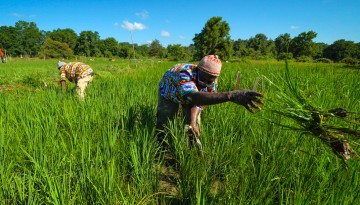
Few farmers attempt to grow rice in the Northeast’s short growing season, but a team of farmers, with the help of Cornell scientists, are experimenting with rice-growing methods to suit New York’s climate.
The first six recipients of the Cornell New York State Hometown Alumni Award were honored at a special recognition ceremony Oct. 4 during Homecoming Weekend.
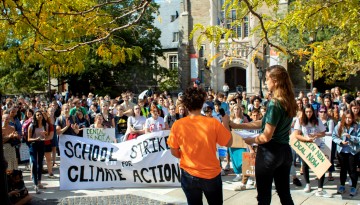
Cornell students participated in a weeklong kaleidoscope of climate change-awareness that involved strikes, symposia and meeting world leaders in New York City.
Researchers from every corner of Cornell are mobilizing to tackle one of the grand challenges of the modern era – migration – with a new initiative that launched Oct. 1.