At the New Rural-Urban Interface held Sept. 29-30, social scientists from Cornell and elsewhere gathered to discuss the cultural, demographic, economic and political dimensions of the changing landscape.
The plant nicknamed "Wee Stinky," one of two flowering-sized titan arums in Liberty Hyde Bailey Conservatory, is prepping for a dazzling reproductive effort to make itself big, hot and smelly.
Cornell will host 40 writing program administrators and faculty Oct. 7-8 for the Ivy Plus Writing Consortium, to discuss programmatic issues, their evolving roles on campus and trends in the field.
The College of Agriculture and Life Sciences and the USDA Oct. 3 convened leaders in farming, government, academia and private enterprise to discuss land tenure and next-generation agriculture.
As a consequence to a warming Earth, the risk of a megadrought in the American Southwest – one that lasts more than 35 years – likely will increase to a 20- to 50-percent chance this century.
A new website called Navigate is designed to save Cornell faculty members time and reduce stress in handling off-campus teaching, research and engagement, nationally and internationally.
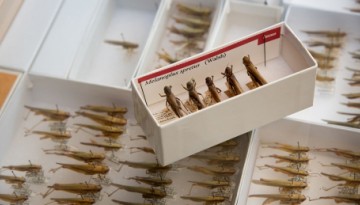
Brandon Woo '19 uncovered three Rocky Mountain locusts in the Cornell University Insect Collection; the locusts wreaked agricultural havoc 150 years ago.