For the average person, the time before the start of the holiday season is the low point in an annual weight gain pattern that peaks during the holidays and takes nearly half a year to fully shed.
Consumer interest in hard cider in North America has surged and Cornell research is revealing ways apples grown with specific orchard management practices can produce more desirable hard cider.
Cornell’s New York State Agricultural Experiment Station in Geneva is poised to expand its food development and technology commercialization capabilities with $1 million in new state funding.
From using drones to track nutrient management in upstate corn fields to working with Head Start programs in Harlem, Cornell Cooperative Extension interns helped New York communities this summer.
Fourteen new projects funded with 2016 Engaged Curriculum Grants are underway. With an additional eight teams receiving renewal funding, the grants involve 93 faculty and staff team members, and 29 departments.
The new field of media studies will be explored in a yearlong series of lectures beginning Oct. 6 that focus on emerging research, particularly by younger scholars in the field.
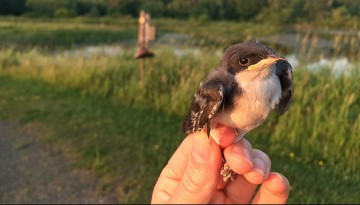
Cornell researchers have demonstrated for the first time that the fatty acid composition in the tree swallow diet plays a key role in chick health and survival rates.