Researchers at the Boyce Thompson Institute for Plant Research on Cornell's campus have identified a crucial player in the defense network that allows plants to respond to pathogens. (Jan. 16, 2008)
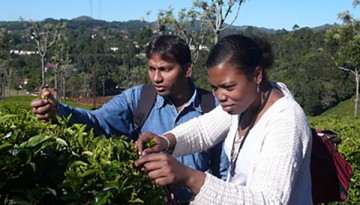
On New Year's Day, 29 Cornell students and eight faculty members left Ithaca for a three-week study tour of India and Thailand as part of Cornell's International Agriculture in the Developing Nations II class.
Cornell University received two one-year institutional development grants for stem cell research from the state of New York as part of $14.5 million in similar awards granted statewide Jan. 7. (Jan. 16, 2008)
Helen Schember has been named executive director of the Cornell Center for a Sustainable Future, joining Frank DiSalvo, CCSF director since the center's September 2007 inception. (Jan. 11, 2008)
Almost gracing the century mark, Cornell alumnus and entomologist William Arthur Rawlins died Dec. 31, 2007, in Black Mountain, N.C., at the age of 99. (Jan. 9, 2008)
James T. Kazda will lead initiatives to meet long-range goals for new construction, major renovations, maintenance projects and planning studies for Cornell's contract colleges. (Jan. 7, 2008)
Mauve Majesty is a new pink ornamental, developed by Professor Mark Bridgen and patented by Cornell, that can bloom all summer long in the cooler, northern states until the first hard freeze in the fall.