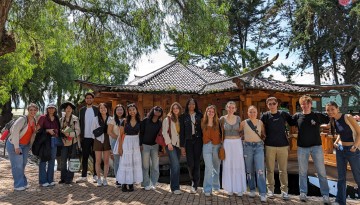
A recently piloted bilateral exchange course is providing new engaged learning opportunities for students from Ithaca, New York to Quito, Ecuador. The partnership between Cornell University and the Universidad San Francisco de Quito (USFQ), Cornell’s Global Hubs partner in Ecuador, is fusing collaboration in the classroom and in the field.
Richard “Dick” W. Robinson, a professor at Cornell AgriTech whose groundbreaking work in cucurbit and tomato breeding is used worldwide, died March 22 in Geneva, New York. He was 93.
Mario Herrero, Timothy Ryan, M.S. ’86, Ph.D. ’89, Steven Strogatz and Peter Wolczanski are Cornell’s 2024 electees to the National Academy of Sciences, the academy announced April 30 at the close of its 161st annual meeting.
Cornell researchers and collaborators have developed a new framework that allows scientists to predict crop yield without the need for enormous amounts of high-quality data – which is often scarce in developing countries, especially those facing heightened food insecurity and climate risk.
Human urine could be a handy resource in tending home gardens and compost piles, thanks to an interdisciplinary collaboration between two Cornell Engineering students and plant scientist Rebecca Nelson.
Former ACLU president Nadine Strossen discussed First Amendment issues with Provost Michael I. Kotlikoff and a panel of student leaders on April 29 in Willard Straight Hall.
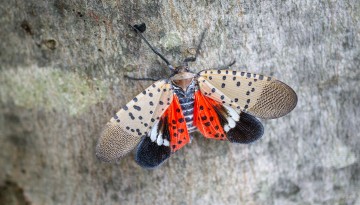
Researchers at the Hudson Valley Research Laboratory – part of Cornell AgriTech – are working to identify effective strategies that the region’s fruit growers can use to fight the invasive spotted lanternfly.
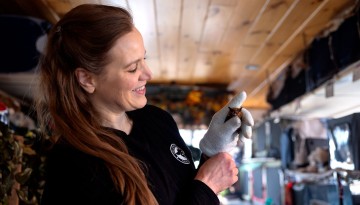
Cornell Lab of Ornithology staff member Victoria Campbell spends her free time caring for bats in need – setting tiny broken bones, feeding babies, treating illness and nursing native bats back to health so they can be released.