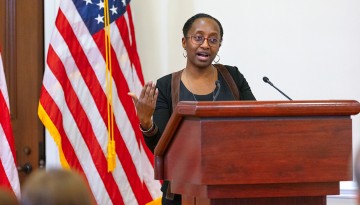
Drawing on personal experience, Jamila Michener urged policymakers at a White House event to learn from beneficiaries of government programs and services.
Astrophysicist Wendy L. Freedman will describe the current state of cosmology and her work with the Hubble Space Telescope that has led to some of the most precise measurements of the Hubble constant made to date.
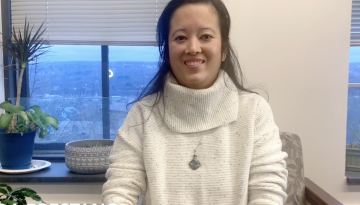
Students can learn American Sign Language during Summer and Winter Sessions online. Instructor Matilda Prestano explains in this video what it’s like to take an intensive, three-week ASL course
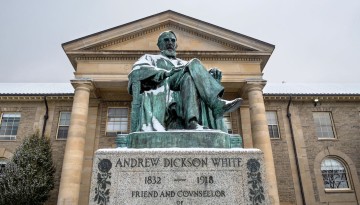
A mathematician and author of best-selling books that speak to math’s societal and technological roles in the world will visit campus March 13-17 as an A.D. White Professor at Large.
The Bowers Undergraduate Research Experience (BURE) is a paid summer research opportunity with Cornell faculty, allowing students to develop new skills and gain insights into careers in research.
In the new performance work “Heading into Night: a Clown Ode on…(forgetting),” director Beth Frances Milles ’88, associate professor of performing and media arts in the College of Arts and Sciences, investigates the poignancies of memory.
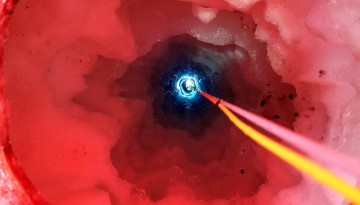
The Icefin team’s observations revealed more than a century of geological processes beneath the Ross Ice Shelf near where it meets Kamb Ice Stream, and will inform models of sea-level rise.
Anna Kornbluh, professor of English at the University of Illinois Chicago, will address "Immediacy: Some Theses on Contemporary Style" on Tuesday, March 7.
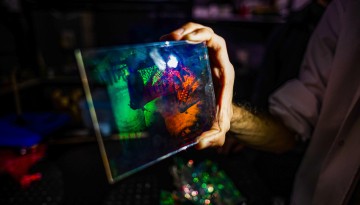
A yearslong effort to launch Cornell-made satellite technology into a neighboring solar system is making a terrestrial stop at the Intrepid Sea, Air and Space Museum in New York City with a new exhibit: “Postcards from Earth: Holograms on an Interstellar Journey.”