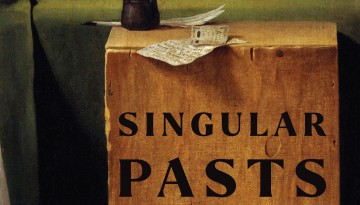
Enzo Traverso critiques a new trend in historical writing, in which historians place themselves in their books, framing their accounts of history as first-person investigations and revealing emotional ties to their subjects.
Ten exceptional early-career scholars will join the College of Arts and Sciences this year as recipients of Klarman Postdoctoral Fellowships, enabling them to pursue leading-edge research in the sciences, social sciences and humanities.
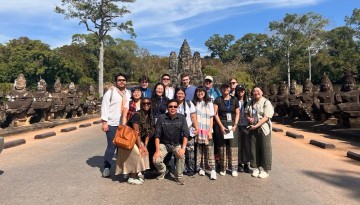
Cambodian heritage and history were the focus for 12 students, seven from Cornell, who traveled to Southeast Asia in January as part of the Cornell Winter Program in Cambodia, a two-and-a-half-week intensive study abroad experience.
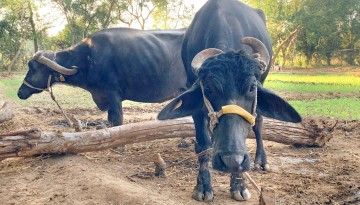
Cornell will teach small farmers in India – the world’s largest dairy producer – how to produce milk more efficiently while limiting greenhouse gas emissions.
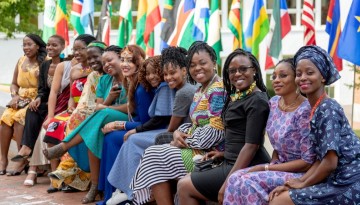
The Jeb E. Brooks School of Public Policy and the Mario Einaudi Center for International Studies will welcome 25 of Africa’s most promising emerging public management leaders for a six-week Leadership Institute sponsored by the U.S. Department of State.
The construction of the Fred Young Submillimeter Telescope being developed by CCAT Observatory Inc., an international consortium of universities led by Cornell, is drawing to a close.
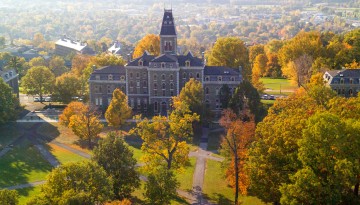
The College of Arts and Sciences has embarked upon a $110 million transformation of McGraw Hall, with several Cornell families pledging more than $40 million in foundational gifts to enable the comprehensive renovation.
New Cornell research is providing a fresh view into the ways a common chemotherapy agent, etoposide, stalls and poisons the essential enzymes that allow cancer cells to flourish.