Once used as a tool for constitutional reform, Congress has repurposed Article V of the U.S. Constitution into a mechanism for taking positions on issues, according to new Cornell research.
The grant from the National Science Foundation will support a team of Cornell physicists who smash matter into its component parts to learn about elementary particles and their interactions.
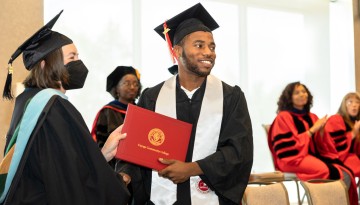
In a July 10 ceremony at the Statler Hotel, the Cornell Prison Education Program honored graduates released since the start of the pandemic, which curtailed prison-based commencements.
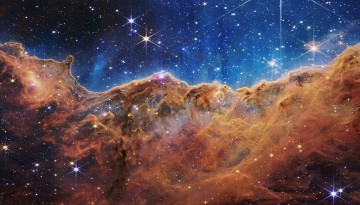
As NASA released its first images from the new James Webb Space Telescope – the next-generation telescope able to peer deeper into the cosmos – Cornell faculty marked the milestone.
Smart thermostats may be falling into a dumb trap. While these devices save homeowners money, Cornell engineers found they may be prompting unintentional energy spikes on the grid.
In her new book, Kim Haines-Eitzen, professor of Near Eastern studies, explores the rich range of sounds that blow and buzz and trickle and chirp through the desert – and what they can teach us about place, the past, solitude and community.
Ann Simmons of The Wall Street Journal has been named the Zubrow Distinguished Visiting Journalist Fellow in the College of Arts and Sciences for the fall.