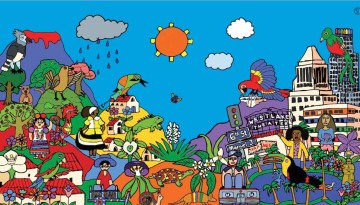
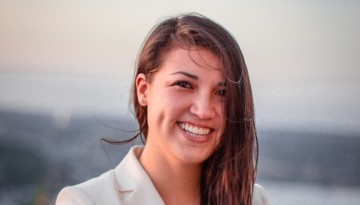
For six years, Klarman Fellow Chaira Galli helped youths from Central America navigate the United States’ labyrinthine asylum process while doing an ethnographic study.
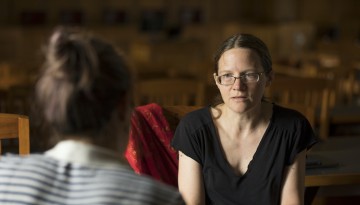
A collaboration led by Eun-Ah Kim, professor in the College of Art and Sciences, employed machine learning to analyze a massive dataset from a quantum metal to settle a debate about this material.
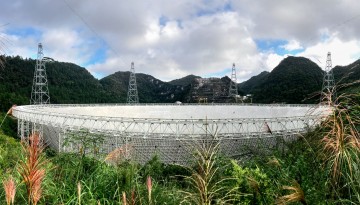
A persistent rapid-fire fast radio burst source – sending out a cosmic ping from more than 3.5 billion light years away – helps reveal the secrets of the broiling space between galaxies.
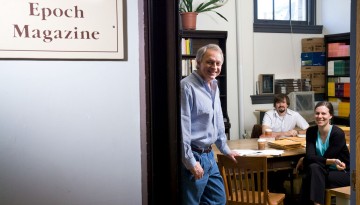
Michael Koch, the longtime editor of Cornell’s renowned literary magazine and lecturer in the Creative Writing Program in the College of Arts and Sciences, died on May 27 after a brief illness. He was 75.
Our 11th episode features Stephanie Wisner ’16, co-founder of Centivax, a therapeutics company that’s creating universal vaccines to reduce and eradicate the remaining complex pathogens of the 21st century.
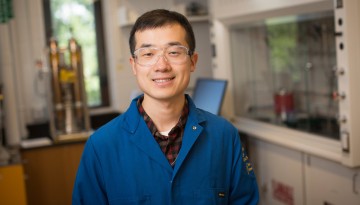
Lin's new process uses readily available substances and inexpensive electrodes to create the large and complicated molecules widely used in the pharmaceutical industry.
Summer Session, running May 31 through August 2, 2022, is open to Cornell and visiting undergraduate and graduate students, high school students and any interested adult. Undergraduates can earn up to 15 credits in on-campus, online, and off-campus courses before the fall semester.