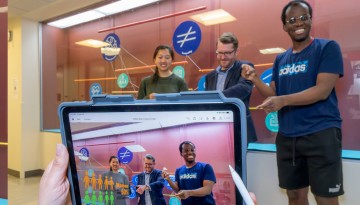
The Department of Sociology has redesigned a glass case on the third floor of Uris Hall with Augmented Reality (AR) to represent the wide field of sociology. The redesign was a collaborative exploration involving student…
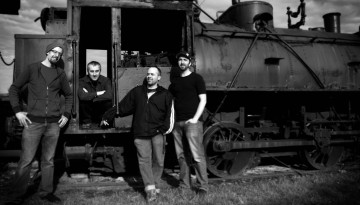
An album featuring the work of Daniel Gaibel, former information technology manager for the Language Resource Center (LRC), will debut this weekend at the Ithaca Festival.
Solving problems like climate change could require dismantling rigid academic boundaries, so that researchers of various backgrounds may collaborate through an “undisciplinary” approach.
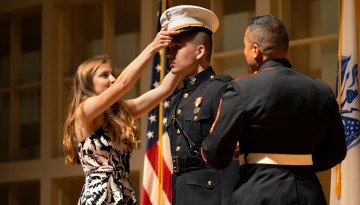
A dozen graduating ROTC seniors were among 19 members of Cornell's Tri-Service Brigade who earned commissions in the Army, Navy, Air Force and Marines during a May 27 ceremony in Alice Statler Auditorium.
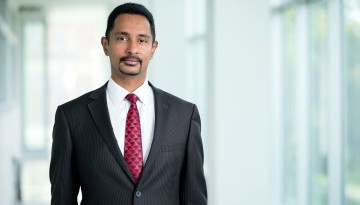
Ray Jayawardhana, the Harold Tanner Dean of the College of Arts and Sciences, has been appointed to a second five-year term, beginning July 1, 2023, and named the Hans A. Bethe Professor, an appointment that begins July 1, 2022.
Twenty seniors in the Milstein Program in Technology & Humanity will graduate this year with degrees in everything from biology to linguistics to computer science to physics.
The FutureSounds Festival extended the existing sound world with presentations by guest builders and performers and newly designed instruments and compositions by Cornell students.