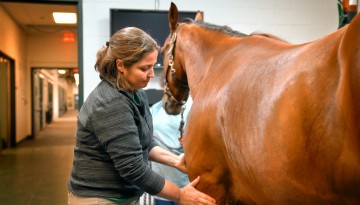
Recent multidisciplinary research at Cornell, led by Dr. Michelle Delco from the College of Veterinary Medicine, reveals that the application of a proprietary peptide may protect cartilage from osteoarthritis.
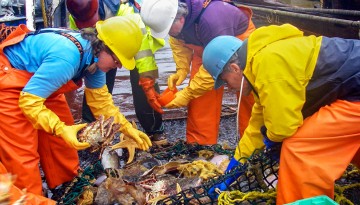
A new collaboration between the Cornell Atkinson Center for Sustainability and The Nature Conservancy this year will fund three studies that could be significant in the face of climate change.
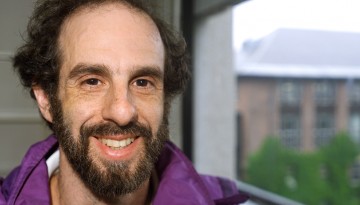
Using cryo-electron microscopy, assistant professor Liz Kellogg has made recent discoveries that add to our knowledge of Alzheimer’s disease and the fundamental mechanisms of DNA recombination.
Robert Howarth has been appointed to the new Climate Action Council, created to bring about New York’s path to reach net zero greenhouse gas emissions and support green energy.
Cornell faculty and students can now champion greener consumer products, supply chains and commercial trade, as the Cornell Atkinson Center for Sustainability began a partnership with The Sustainability Consortium on Jan. 13.
Renerva, a medical startup developing an injectable gel to speed the healing of damaged nerves and creating a nerve-graft product, has joined Cornell’s McGovern Center.
Paul Ginsparg, Ph.D. ’81, professor of physics and information science, is the recipient of the American Institute of Physics 2020 Karl Taylor Compton Medal for Leadership in Physics.
Soraya Nadia McDonald, cultural critic for The Undefeated, a website exploring the intersection of race, sports and culture, has been named winner of the 2019-20 Nathan Award for Dramatic Criticism.