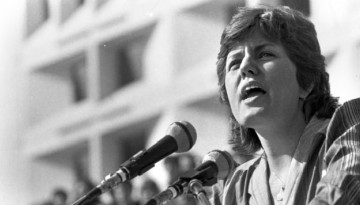
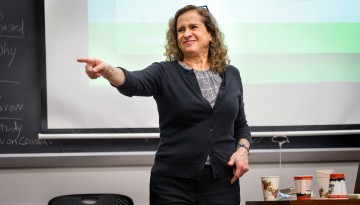
Disarmament advocate Randall Caroline Watson Forsberg’s dissertation is among the works being released under the Einaudi Center’s Cornell Global Perspectives imprint with Cornell University Press.
To nurture cooperation between Ithaca’s community groups and Cornell campus organizations, the ninth Cornell Town-Gown Awards recognized key partnerships at a ceremony held Dec. 7 at Ithaca High School.
Jeffrey Palmer, assistant professor in the Department of Performing and Media Arts, has released two new short films that continue his mission to capture untold stories.
Professor George Hutchinson has been recognized by the Modern Language Association of America for his book “Facing the Abyss: American Literature and Culture in the 1940s.”
The Office of Engagement Initiatives is accepting applications for grants to fund faculty, staff and students who are launching, advancing or participating in community-engaged learning at Cornell.
Events at Cornell this week include Lessons and Carols at Sage Chapel; an indoor bouldering event for climbers and an outdoor gear sale; a United Way celebration and Quentin Tarantino’s Hollywood story.
Senior lecturer Brenda Schertz, a whirlwind of energy, teaches the first American Sign Language classes at Cornell that meet the College of Arts and Sciences’ three-semester world language requirement.