Kate Manne, associate professor of philosophy in the College of Arts and Sciences, has won the 2019 American Philosophical Association’s Book Prize for her first book, “Down Girl: The Logic of Misogyny.”
The newest cohort of Arts and Sciences College Scholars, students who plan their own interdisciplinary curriculum around a topic that doesn’t fit into a traditional major, are interested in a wide range of disciplines.
Of the approximately 1,500 stories posted by the Cornell Chronicle, research stories about air pollution, engineering and genetics were the four most-read stories of the past 12 months.
At Cornell’s largest-ever winter graduate recognition ceremony, President Martha E. Pollack congratulated more than 540 graduates and encouraged them to continue to explore different perspectives through reading.
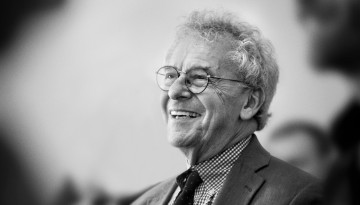
Isaac Kramnick, the Richard J. Schwartz Professor of Government Emeritus, a renowned scholar of English and American political thought and history, and a longtime champion of undergraduate education, died Dec. 21 in New York City. Kramnick was 81.
Wonder Women, a “Learning Where You Live” course for North Campus residents, engages participants in discussions with guest speakers over personal definitions of success, decision-making and identity building.
After hosting nearly 20 listening sessions, a faculty committee exploring how best to elevate public policy at Cornell plans to submit its final report in January.
In a review of thousands of peer-reviewed studies, the What We Know Project an initiative of Cornell’s Center for the Study of Inequality, has found a strong link between anti-LGBT discrimination and harms to the health and well-being of LGBT people.
Rachel Beatty Riedl, director of the Mario Einaudi Center for International Studies, launched her new book, “From Pews to Politics: Religious Sermons and Political Participation in Africa,” Dec. 11 at the University of Zambia.