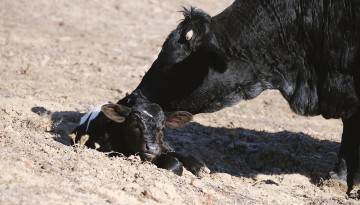
Globally, by the end of this century low-income cattle farmers in poor countries may face financial loss between $15 to $40 billion annually, due to looming climate change.
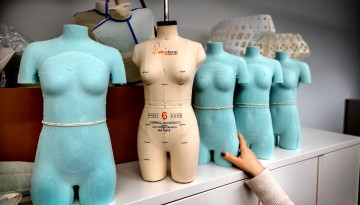
The technology, developed in the Department of Human Centered Design, aims to improve the fit and design of clothing and increase the sustainability of online shopping.
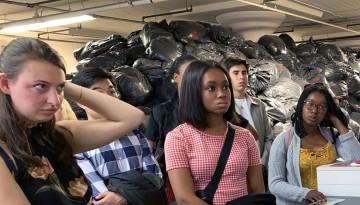
A new course on global textile and apparel sustainability attracts students from across the university and immerses students in the real-life, contemporary challenges of sustainability in the fashion industry. The course was structured to address the connection of fashion to the 17 sustainability goals outlined by the United Nations Department of Economic and Social Affairs.
The Cornell Center for Social Sciences grant program, which supports social science research by Cornell faculty members, has awarded $85,000 to 10 professors for their 2022-23 CCSS Faculty Fellows program.
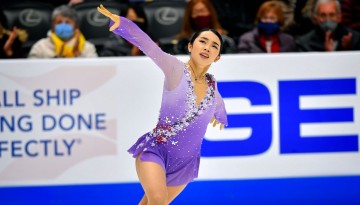
Bolstered by a fourth-place finish from Karen Chen ’23 in the individual free skate, the U.S. figure skating team took the silver medal in the team competition Monday at the 2022 Winter Olympics in Beijing.
The Division of Nutritional Sciences and partner RTI International won a five-year, $23 million award to coordinate research for the NIH’s Nutrition for Precision Health study.
Professors Neil Lewis Jr. ’13 and Tashara Leak are leading the new Action Research Collaborative, which will serve as an institutional hub for cross-campus action research collaborations between Ithaca and New York City, and elsewhere.
Figure skater Karen Chen ’23 is headed to Beijing next month for the Winter Olympics, and will be joined from Cornell by five former Big Red women’s hockey players plus Doug Derraugh ’91, the Everett Family Head Coach of Women’s Hockey.
From teaching food science at the Ithaca Farmers Market to researching how youth feel about their race and ethnicity, this year’s Engaged Faculty Fellows are demonstrating the range of work that’s possible through community-engaged learning and research. The 2021-22 cohorts include 15 faculty from eight Cornell schools and colleges.