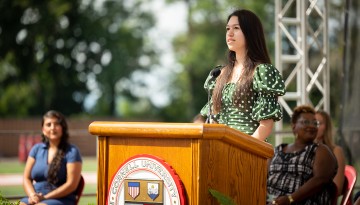
Hundreds of first-year and transfer students were heaped with advice, encouragement and well-wishes at New Student Convocation, held Aug. 21 at Schoellkopf Field.
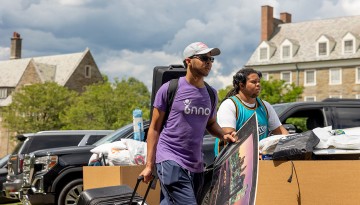
As the residence halls honoring Ruth Bader Ginsburg, Hu Shih and Barbara McClintock opened, resident advisers handed these newest Cornellians their room keys – and their futures.
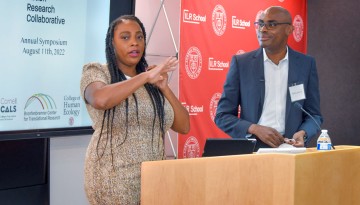
Members of Cornell’s Action Research Collaborative joined representatives from New York City agencies at a symposium Aug. 11 to discuss innovative new solutions aimed at dismantling the systemic racism that has led to inequities around food, nutrition, education, health and employment.
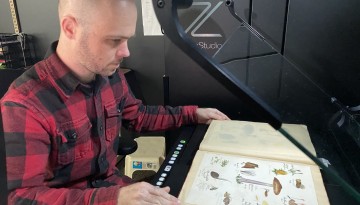
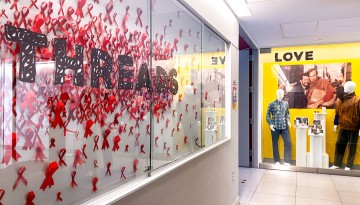
“Threads of Life, Loss, and Love: An HIV/AIDS Story” runs Aug. 15 through Dec. 2 in the Human Ecology Commons and Level T display cases and features garments, accessories, documents, ephemera and film from the collection of Sylvia Goldstaub.
Students and lifelong learners are invited to explore a new interest, enhance their resume or strengthen their professional skills through Cornell’s Fall Part-Time Study Program, which runs Aug. 22 – Dec. 17, 2022. Registration for most students begins August 1.
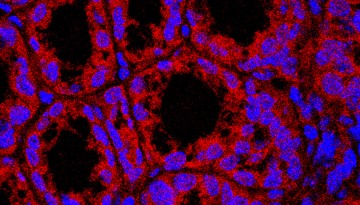
Sphingolipids – prominent molecules produced by bacteria in the gut microbiome – appear to ameliorate a problematic fatty liver, according to new Cornell nutrition research.
Extreme heat threatens to reverse progress made in combating early child malnutrition as the planet continues to warm, according to Cornell research focused on five West African nations.
New Cornell psychology research is the first to examine daily experiences of racial discrimination as a key stressor in the lives of African American couples.