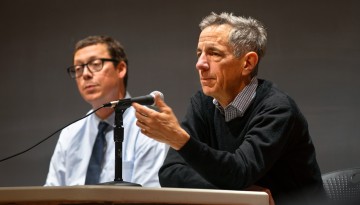
Maria Cristina Garcia, from the College of Arts and Sciences, and Anthony Burrow, from the College of Human Ecology, have won the inaugural Faculty Award for Excellence in Research, Teaching and Service Through Diversity.
Cornell and Rice University researchers have found that while adding carbon organic matter to fields is advantageous, it may muddle the beneficial underground communication between legume plants and microorganisms.
Researchers from four colleges will study potential warnings for electronic cigarette advertisements that seek to deter teen use of the products without discouraging adults who are trying to quit smoking.
The recommendations to refocus the College of Human Ecology and form several “superdepartments” are the latest steps in a multiyear review of how to strengthen the social sciences at Cornell.
Faculty members Anthony Burrow and Julia Felippe, Ph.D. ’02, have been appointed provost’s fellows for public engagement, to advance Cornell’s public engagement mission and initiatives around community-engaged learning and research.
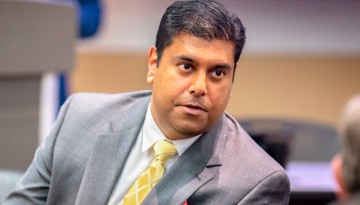
Dr. Sumit Narayan Niogi, assistant professor of radiology and clinical associate in radiology at Weill Cornell Medicine, has been named director of the Cornell Magnetic Resonance Imaging Facility.
Cornell faculty and students can now champion greener consumer products, supply chains and commercial trade, as the Cornell Atkinson Center for Sustainability began a partnership with The Sustainability Consortium on Jan. 13.
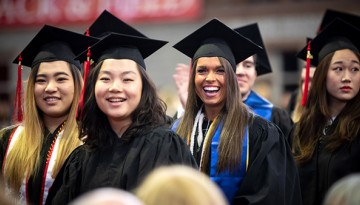
At Cornell’s largest-ever winter graduate recognition ceremony, President Martha E. Pollack congratulated more than 540 graduates and encouraged them to continue to explore different perspectives through reading.
After hosting nearly 20 listening sessions, a faculty committee exploring how best to elevate public policy at Cornell plans to submit its final report in January.