Students in the College of Veterinary Medicine provided spay-neuter and wellness services for a total of 50 cats from underserved communities in the greater Ithaca area to mark World Spay Day Feb. 12
The tools of AI and machine learning will soon be at the fingertips of the College of Veterinary Medicine’s faculty, staff and students to mine more than 1.4 million clinical cases and 14.2 million diagnostic tests to assist in clinical research.
Thanks to a new $12.1 million grant from the Dave & Cheryl Duffield Foundation, the College of Veterinary Medicine is launching a new institute focused on companion animal behavior that will serve as a one-of-a-kind resource for veterinarians and pet owners nationwide; The Duffield Institute for Animal Behavior.
Twenty-six students with businesses ranging from drinking water treatment to alternative medicine to kitchen robots, received fellowships to work on their businesses this summer.
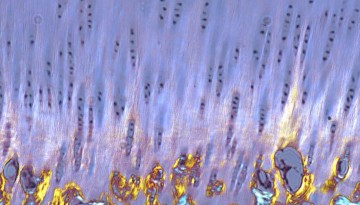
Four Cornell faculty members from three different colleges received the 2022 Kappa Delta Ann Doner Vaughn Award for their collaborative research on the mechanics and composition of articular cartilage and its relevance to disease.
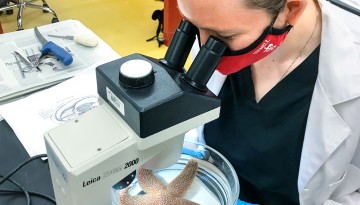
Michelle Greenfield, a third-year veterinary student, has leveraged her passion for marine life into Aquadocs, the only aquatic veterinary podcast as well as a top 50 life sciences podcast on iTunes.