For couples hoping for a baby via in vitro fertilization, chances have improved. A process that once took hours now takes minutes: Cornell scientists developed a device that quickly corrals strong, viable sperm.
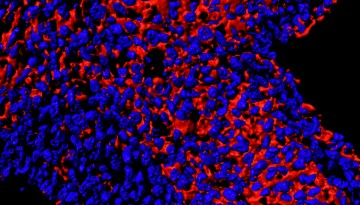
A previously ignored part of the intestine has turned into the key to its most crucial moment in embryonic development: the rotation that winds intestines.
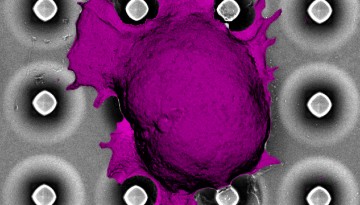
A new Cornell program will train graduate students interested in specializing in “immuno-engineering,” an emerging hybrid field that combines engineering and immunology.
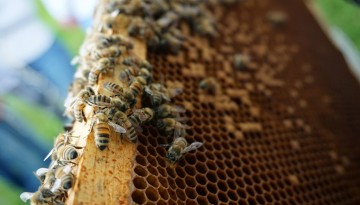
Cornell faculty members are offering the first honeybee health course at Cornell for veterinary student; the bees are important for New York’s agricultural economy.
Nine projects were awarded Center for Advanced Technology grants in 2018-2019. The grants are given to faculty members in life sciences fields who partner with a New York state industry for research and development.
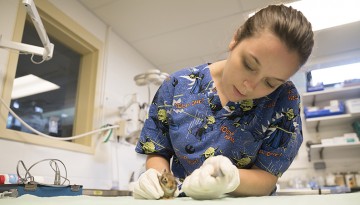
Thirteen-year-old Logan recently became the first cat in the United States to undergo a surgical spinal technique developed in Europe at the College of Veterinary Medicine.
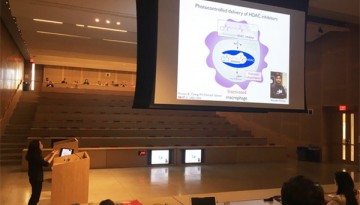
Cornell experts from Ithaca and New York City gathered June 26-27 at the College of Veterinary Medicine for the Immunology in Health and Disease Symposium.