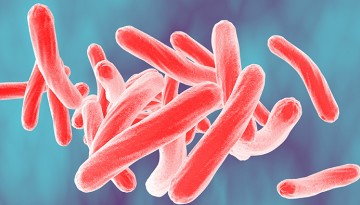
The College of Veterinary Medicine will host a conference on sharing antimicrobial resistance data among veterinary and public health agencies and stakeholders May 3-4.
Cornell University held the first Annual Cornell Cancer Research Symposium at the College of Veterinary Medicine on April 5-6 to showcase the breadth of cancer research on the Ithaca campus.
Cornell researchers seek to answer questions about the origin of a key step in transcription – the process of copying codes in DNA and transferring them to RNA in order to make proteins.
While effective against bacteria, antibiotics alone cannot restore the damaged mammary tissue in cows when mastitis strikes, Cornell researchers have found.
Faculty Spotlight: Kirstin Petersen: Engineering robot collectives that mimic social insects; Nicholas Klein: Transportation planning as social mobility; Hector Aguilar-Carreno: The microscopic fight against a deadly trojan horse and Ludmilla Aristilde: Transformative scientist.
The lab of Minglin Ma, associate professor in the College of Agriculture and Life Sciences, will receive up to nearly $7 million from Novo Nordisk for research into a Type 1 diabetes implant device called NEED.
Robin Radcliffe, senior lecturer in wildlife and conservation medicine, won the 2018 George D. Levy Faculty Award in recognition of his work with community partners.