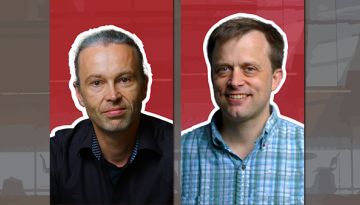
Thorsten Joachims and Andrew Myers, two faculty members in the Cornell Ann S. Bowers College of Computing and Information Science and leading researchers in the field of computer science have each received named professorships.
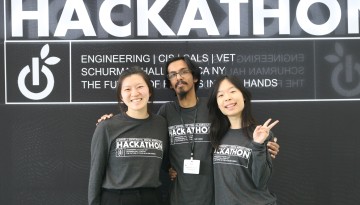
More than 120 students took part in the Digital Agriculture Hackathon, sponsored by the Cornell Institute for Digital Agriculture and Entrepreneurship at Cornell.
Assistant professors Anna Y.Q. Ho, Chao-Ming Jian, Rene Kizilcec and Karan Mehta are among 126 early-career researchers who have won 2024 Sloan Research Fellowships from the Alfred P. Sloan Foundation.
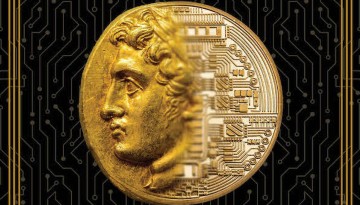
A confluence of events, combined with a healthy obsession for details and a love of writing, gave Cornell Tech computer scientist Ari Juels just what he needed to produce his second fiction thriller, “The Oracle.”
Cornell’s participation in the U.S. Commerce Department initiative will help advance development and deployment of safe and trustworthy artificial intelligence technology.
Cornell Tech and the SC Johnson College of Business have partnered to launch Generative AI for Business Transformation, a certificate program to help leaders harness the power of AI.
In a new analysis, Cornell researchers examined three autopen controversies to see what they reveal about when it is OK – and not OK – to automate communication.