Scholars from Cornell and the Open University of the Netherlands have developed a programmable network model that offers the ability to customize packet scheduling – the air-traffic control mechanism built onto the network switches that make the internet possible.
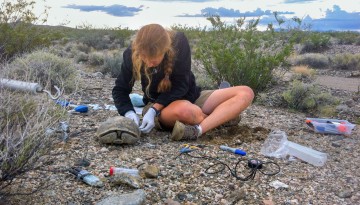
A new method could be used by biologists to estimate the prevalence of disease in free-ranging wildlife and help determine how many samples are needed to detect a disease.
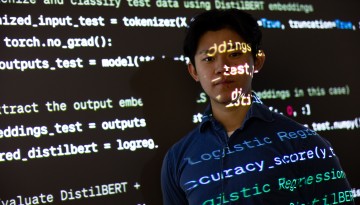
Oleg Melnikov, visiting lecturer at the Cornell Bowers College of Computing and Information Science, discusses Cornell’s Natural Language Processing with Python online certificate program.
Tech expert says social media companies could limit harassing and extremist speech but often choose not to because it serves their bottom line, in her Dec. 7 talk, “Selling Out Free Speech.”
Cornell researchers have released a new open-source platform, Cascade, that can run artificial intelligence models in a way that slashes expenses and energy costs while dramatically improving performance.
Cornell has signed on as an inaugural member of the AI Alliance, an international community of researchers, developers and organizational leaders committed to supporting and enhancing open innovation in artificial intelligence.
Researchers from Cornell Tech have developed a method to identify delays in the reporting of incidents such as downed trees and power lines, which could lead to practical insights and interventions for more equitable, efficient government service.