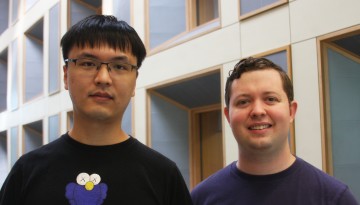
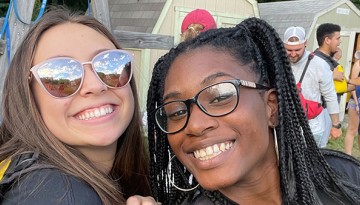
Chenhui Deng and Andrew Butt, Ph.D. students from the School of Electrical and Computer Engineering, have been awarded a 2022 Qualcomm Innovation Fellowship for their proposal “Power Inference with Self-Supervised Learning.”
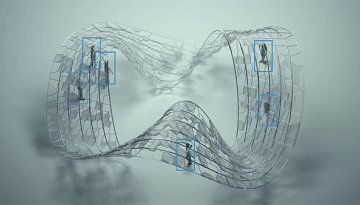
As part of a pilot collaboration between AAP and Cornell Tech, colleagues came together across disciplines to explore innovative ways of teaching and designing. Now, they are poised to take their ideas even further.
Cornell Tech researchers have developed a mechanism for preserving anonymity in encrypted messaging – which conceals message content but might not cloak the sender’s identity – while simultaneously blocking unwanted or abusive messages.
A Cornell-led group of researchers has developed an online search method that employs natural language processing to identify terms that are semantically similar to those for cancer screening tests, but in colloquial language.
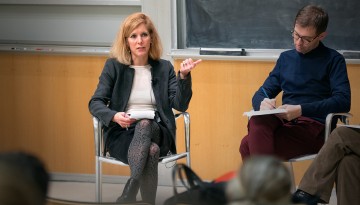
Technology policy is a broad and emerging field and touches almost every aspect of our daily lives. Under the direction of Professor Sarah Kreps, the new Cornell Brooks School Tech Policy Institute at the Cornell Jeb E. Brooks School of Public Policy will provide valuable opportunities for students and researchers.
Cornell Bowers CIS is hosting a weekly conversation on Fridays about the future of AI, which will include top industry leaders and groundbreaking researchers who are building the technology and examining its societal, legal, and ethical impacts.
The faculty have expertise in a broad range of areas, including robotics, artificial intelligence, digital fabrication, public health, and population genetics.
Now in its third year, CSMore has grown into a rigorous one-month program for potential CS majors, complete with course prep, faculty research talks, a full slate of social activities, and networking opportunities with major companies.