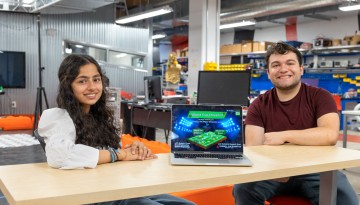
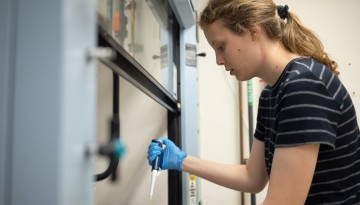
The FIFA World Cup begins Nov. 20 in Qatar, and Cornell Engineering is partnering with the Afghan Dreamers all-girls robotics team in an effort to harness this energy – and inspire young people to dream big, in both soccer and STEM learning.
The app developed by Cornell researchers uses augmented reality to help users repeatedly capture images from the same location with a phone or tablet to make time-lapse videos – without leaving a camera on site.
Personal sensing data could help monitor and alleviate stress among resident physicians, although privacy concerns over who sees the information and for what purposes must be addressed, according to collaborative research from Cornell Tech.
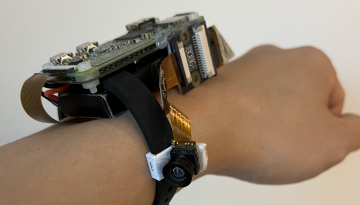
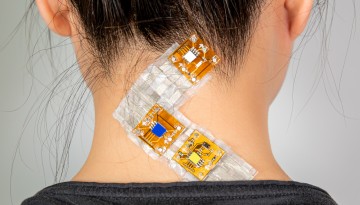
Members of Cornell’s Hybrid Body Lab have come up with a reliable on-skin computing interface that’s easy to attach and detach, and can be used for a variety of purposes – from health monitoring to fashion.
With funding from CALS and Cornell Bowers CIS, Natalie Bazarova and Qian Yang have founded the Digital and AI Literacy Initiative in an effort to equip underserved communities with the resources to use digital technologies safely and responsibly.