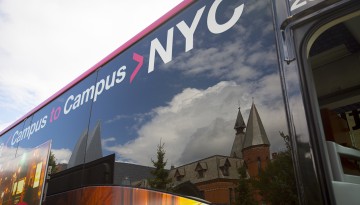
The Autonomy and Mobility in Engineered and Natural Environments Workshop at Cornell Tech highlighted research from the smart cities and urban technology academic communities in Ithaca, NYC and beyond.
Most people have waited until the last minute to complete a school assignment at some point in their lives, but a new study finds that first-generation students and those belonging to underrepresented ethnic and racial groups turn in assignments later, on average, than their nonmarginalized peers.
Activities beyond campus – such as business air travel, student commutes and purchases like lab equipment – account for more than 60% of Cornell’s carbon emissions, according to a new analysis.
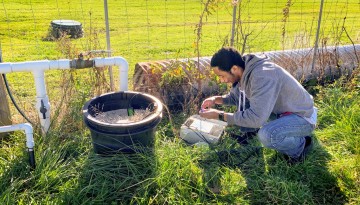
A new study shows how digital ag may be unintentionally creating problems for farmers, and found that enabling farmers to tinker with their own systems and involving them early in the design process could better translate technology from the lab to the field.
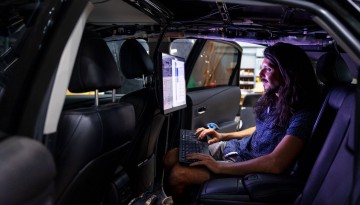
Researchers at Cornell Bowers CIS and the College of Engineering have produced three concurrent research papers on autonomous vehicles’ ability to create “memories” of previous experiences and use them in future navigation.
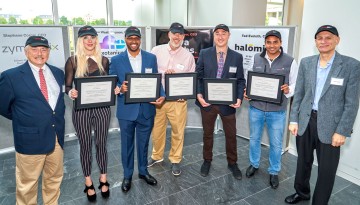
As the pandemic pomp and COVID circumstances dissipate, Cornell’s McGovern Center and Praxis Center incubators graduated five startups, putting them on the road to success.
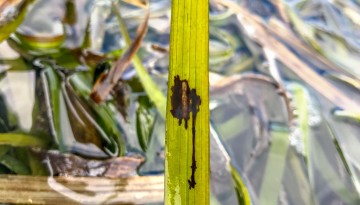
A combination of ecological field methods and AI has helped an interdisciplinary research group detect eelgrass wasting disease from San Diego to southern Alaska, and determine that it’s caused by warmer-than-normal water temperatures.
Carla P. Gomes, the Ronald and Antonia Nielsen Professor of Computing and Information Science, is the 2022 recipient of the ACM – AAAI Allen Newell Award, given in recognition of her foundational contributions to artificial intelligence (AI) and for founding and developing the field of computational sustainability.