At the upcoming Conference of the Parties – best known as COP27 – 11 Cornell students will help delegations from small countries gain a stronger environmental voice.
Both the type of online content moderator and the “temperature” of the harassing content influenced people’s perception of the moderation decision, new research finds.
The Eclectic Convergence conference included talks from six entrepreneurs, business executives and venture capitalists, as well as a pitch competition.
Cornell has been selected to join the Schmidt AI in Science Postdoctoral Fellowship, a program of Schmidt Futures, to accelerate the next scientific revolution by applying artificial intelligence to research in science, technology, engineering and mathematics.
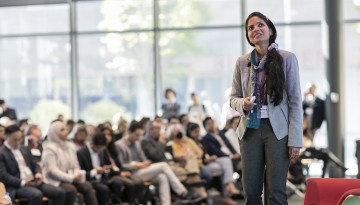
Catherine Tom ’24 recounts her experiences at the Grace Hopper Conference, an annual celebration of women in computing named for the pioneering mathematician and computer scientist.
An Oct. 14 ceremony honored the transformative gift from Ann S. Bowers ‘59 that established the college that now bears her name, and celebrated the upcoming construction of a new building complex that will help meet rising demand for education and innovation in the computing and information science fields.
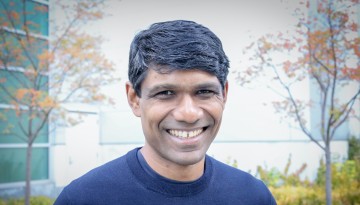
Popular Science’s 2022 list of “the top up-and-coming minds in science” includes Samitha Samaranayake, assistant professor in of civil and environmental engineering, citing his work to design algorithms to help varied modes of mass transit work more seamlessly together.
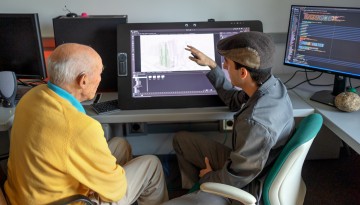
At 88 years old, professor Don Greenberg ’55 is still on the cutting edge: He’s launched a new undergraduate and graduate course for students in both architecture and computer science, “Design in the Age of Digital Twins.”