A multimillion-dollar grant from LinkedIn to the Cornell Ann S. Bowers College of Computing and Information Science has launched a long-term, strategic partnership to support research in artificial intelligence, and to bolster diversity initiatives within the college.
Artificial Intelligence, Design + Technology and Quantum Science and Technology will become part of “Radical Collaboration Drives Discovery,” bringing to 10 the number of initiatives in the provost office’s five-year-old program.
A public panel on climate justice and data – ranging from communities using inexpensive sensors for environmental monitoring, to collaborative analysis of obscure government records – will take place at 5:30 p.m. Friday, March 18, in G01 Gates Hall.
Students are invited to enroll now for Cornell’s Summer Session where they can earn up to 15 credits. Courses are offered online, on campus and around the world in three-, six- and eight-week sessions between May 31 and August 2, 2022.
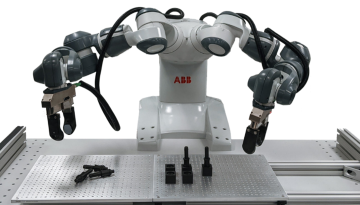
When we think of having our own handy multi-purpose robots, we tend to picture something out of Star Wars or The Jetsons — but the useful technology of the ‘future’ may not be as far off as we think. Maria Bauza Villalonga, PhD student at MIT, hosted a Seminar @ Cornell Tech to show how robots can become our best allies.
For the first time in its 23-year history, the Cornell Ann S. Bowers College of Computing and Information Science has more than 2,000 undergraduate majors within its three departments – the latest milestone amid a sixfold growth in enrollment over the last decade.
Eleven assistant or associate professors representing four colleges have recently received National Science Foundation Faculty Early Career Development Awards to support their research objectives.
A team from Cornell Bowers CIS has developed AutoPhoto, a robotic system that can roam an interior space and capture aesthetically pleasing photographs through a machine learning process.
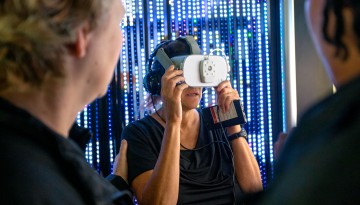
Powering augmented and virtual reality technologies to tackle real-world problems is the focus of a two-year, $1.8 million grant from Meta and Spark AR to Cornell Bowers CIS and Cornell Tech’s XR Collaboratory.