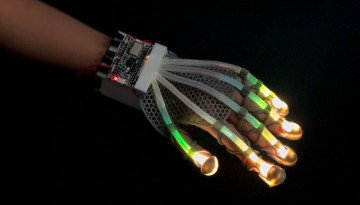
Cornell researchers have created a fiber-optic sensor that combines low-cost LEDs and dyes, resulting in a stretchable “skin” that detects deformations such as pressure, bending and strain.
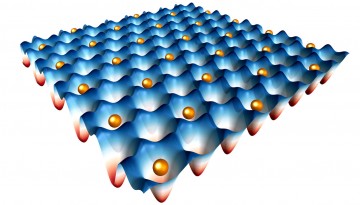
A Cornell-led collaboration has developed a way to stack two-dimensional semiconductors and trap electrons in a repeating pattern that forms the long-hypothesized Wigner crystal.
Undergrads from the School of Hotel Administration collaborated with students from a range of disciplines to create Cornell Blockchain, a club that aims to develop the next generation of blockchain leaders.
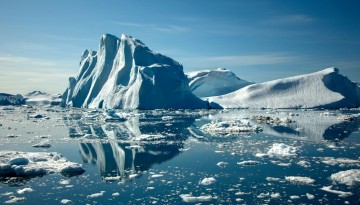
Thanks to $1 million in new grants, Cornell scientists will model adding reflective aerosols into the stratosphere, which may deflect enough sunbeams to reduce Earth’s temperature and limit climate change.
A Cornell-led collaboration developed a 3D printing technique that creates cellular metallic materials by smashing together powder particles at supersonic speed.
Warren Knapp, 82, professor emeritus of meteorology and climate in the Earth and atmospheric sciences, and the second director of Cornell’s Northeast Regional Climate Center, died Oct. 3 in Ithaca.
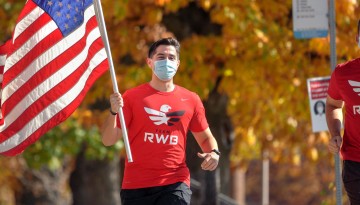
Cornell continues to build a community that welcomes veterans to the university, based on an array of programs and resources that proactively address their needs and draw on their strengths and experiences.
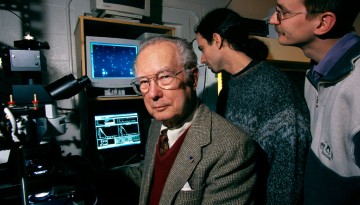
Applied physicist Watt W. Webb, the S.B. Eckert Professor of Engineering Emeritus and a pioneer in methods for imaging living biological systems, died Oct. 29. He was 93.