After poring over NASA’s Cassini mission data, Cornell astronomers now conclude that the teamwork of seven moons, not just one, keeps Saturn's ring corralled.
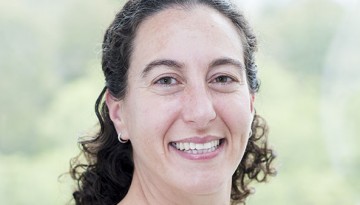
Ilana Brito, assistant professor in the Nancy E. and Peter C. Meinig School of Biomedical Engineering, has won a Packard Fellowship for Science and Engineering, which supports early-career researchers.
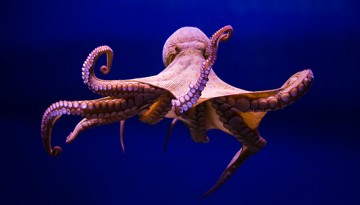
Inspired by the color- and texture-morphing ability of octopuses, researchers have developed a way to transform with precision a 2-D stretchable sheet into a 3-D surface.
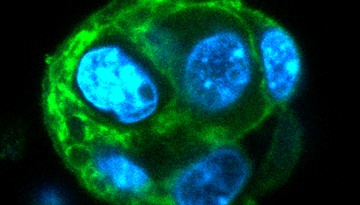
A team led by researchers from Cornell's Ithaca and New York City campuses has used a tool it developed to explain an immune system process. The work could benefit cancer research.
A group led by physics professor Frank Wise has proposed a method for locking different modes of laser light together to create short pulses with a variety of spatiotemporal profiles.
Assistant professors Ilana Brito, Iwijn de Vlaminck and Michael Sheehan have all been awarded National Institutes of Health Director's New Innovator Awards, worth $1.5 million to help fund five years of research.
On the brisk autumn morning of Wednesday, Oct. 8, 1997, Cornell students, faculty and staff strolling by McGraw Tower noted an unusual sight: a large pumpkin impaled on the spire 173 feet up. The question remains: Whodunit?