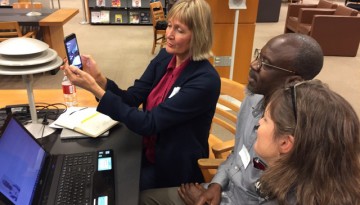
Knowledge Matters, a workshop series designed for Cornell faculty members and academic staff, is helping participants translate their research into a variety of digital media platforms.
Seven faculty members were honored with awards from the Louis H. Zalaznick Teaching Assistantship program, allowing them to expand their courses or add teaching assistants.
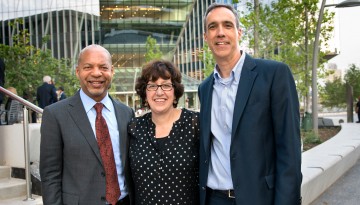
On the eve of the Cornell Tech campus dedication, excitement was already building as guests gathered for a cocktail hour, art tours, live musical entertainment and a celebration dinner.
Cornell officially strengthened its already sizable New York City presence Sept. 13 with the dedication of the glittering, futuristic Cornell Tech campus on Roosevelt Island.
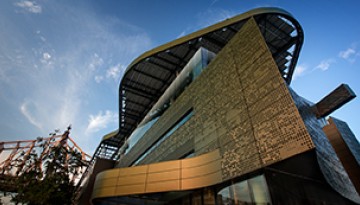
With architectural design and aesthetics reflecting its mission of collaboration and innovation, Cornell Tech is dedicating a new type of urban campus in the heart of New York City.
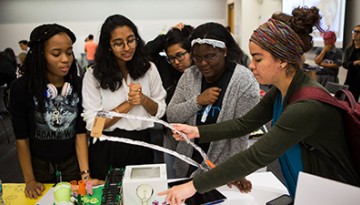
Cornell Tech has fostered community connections through partnerships with Roosevelt Island residents, the City University of New York, and local schools in New York City and Ithaca in advance of the dedication of the Roosevelt Island campus Sept. 13.
Days before the Cornell Tech campus dedication Sept. 13 on Roosevelt Island, Founding Dean and Vice Provost Dan Huttenlocher talks about his vision for the campus and how Cornell Tech fits into an ever-changing and increasingly digital world, now and in the future.