The Cornell NanoScale Science and Technology Facility is celebrating its 40-year anniversary Thursday, Sept. 14, with a full day of presentations and panel discussions on campus.
Cornell is leading the largest single deployment of seismometers along the Alaskan Peninsula – a $4.5 million endeavor to solve long-standing mysteries about the region.
The second annual Cornell Neurotech Mong Family Foundation Symposium on Sept. 22 will feature three neuroscientists who will discuss their research exploring the brain.
A slate of six projects totaling more than $1 million has been announced to generate innovative research in the combined fields of agriculture, computation and engineering.
The inaugural class of international faculty fellows received research funding and contributed to interdisciplinary collaboration through their colleges and the Mario Einaudi Center for International Studies.
Festival of Scholarship, on the eve of the inauguration of Martha E. Pollack as Cornell's 14th president, showcases the work of more than 30 student groups.
Architect and educator Alfred (Fred) H. Koetter Jr., M.Arch. ’66, whose projects included two Cornell campus buildings, died Aug. 21 in Brookline, Massachusetts. He was 79.
Jin Suntivich, assistant professor of materials science and engineering, will study catalysts in a new way using a $750,000 award from the U.S. Department of Energy’s 2017 Early Career Research Program.
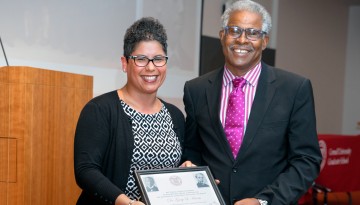
The Cornell Graduate School has honored Gary L. Harris '75, M.S. '76, Ph.D. '80, with the inaugural Turner Kittrell Medal of Honor, given to alumni for significant national or international contributions to the advancement of diversity, inclusion and equity.