Cornell scientists and engineers are seeing wind in high resolution, creating the world's largest, most-detailed wind maps ever from the picturesque hills of Perdigão, Portugal.
If you want to know what sort of video games you'll be playing next year, stop by at the annual Game Design Initiative at Cornell Showcase from 4 to 7 p.m. Friday, May 19.
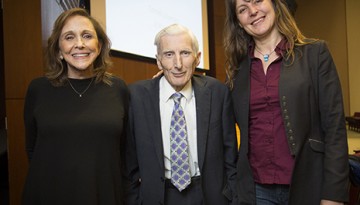
Lord Martin Rees, who has probed deep into the cosmos, studied gamma-ray bursts and galactic formation, spoke May 8 at Cornell on issues closer to home: the preservation of our “pale blue dot.”
Paulette Clancy, the Bodman Professor of Chemical Engineering, and Heather Kolakowski, lecturer in the School of Hotel Administration, won 2017 Kaplan Family Distinguished Faculty Fellowships April 25.
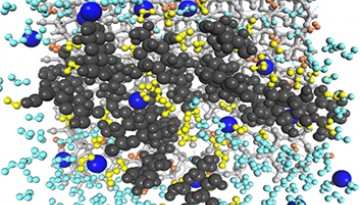
Organic material added by plant roots and microbes provide nutritious candy for the soil. Literally. Cellular sugar boosts water and nutrient retention, says new Cornell research.
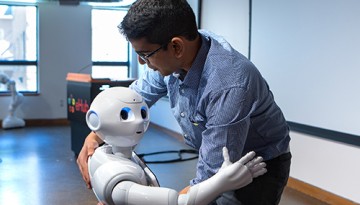
Students competed for $10,000 in prize money to offer the best ideas on how Pepper, a humanoid robot that can interpret emotions and have intelligent conversations, can be used in the hospitality industry.
Dig into digital agriculture, comprehend plant breeding biotechnology, and learn out how the microbiome may solve food production problems at an agricultural technology and partnership forum June 7.
The perception that many minerals, such as copper and aluminum, are becoming scarce is challenged in a new report that also highlights the environmental and social keys to unlocking future resources.