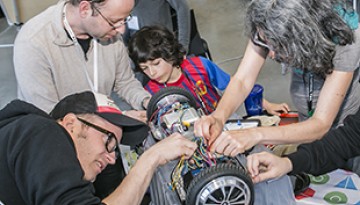
Joseph Halpern, professor of computer science, lectured on "Moral Responsibility, Blameworthiness and Intention: In Search of Formal Definitions," speaking more about philosophy than robotics.
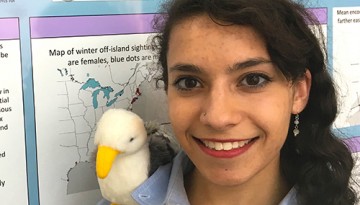
More than 80 students unveiled their scholarly work at the 32nd annual Spring Research Forum hosted April 27 by the Cornell Undergraduate Research Board.
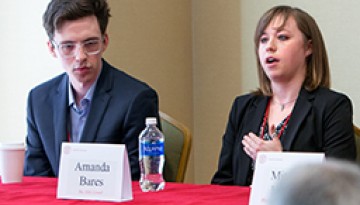
A panel of doctoral students reminisced about their experiences as the first class of commercialization fellows April 28 at Entrepreneurship at Cornell's Celebration conference.
Cornell undergraduates joined 200,000 green advocates to parade down Washington's Pennsylvania Avenue for the Peoples Climate March April 29 – in sultry heat – to advocate for rescuing the world from environmental deterioration.
A collaboration of researchers from engineering and fiber science has yielded a promising new polymer that could change the way textiles achieve oleophobicity, the ability to repel oils.
More than 200 people gathered April 24 to honor the civic outreach of Cornell students at the 2017 Community Engagement Showcase, which displayed several dozen projects associated with the community.