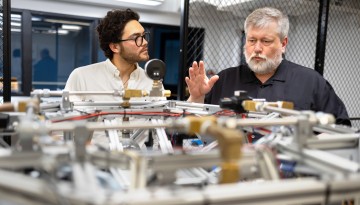
A simulator - with real, hovering spacecraft - would have allowed researchers, companies and government agencies to test crucial space technologies, but a stop-work order from the federal government has halted construction.
Cornell researchers are demonstrating how artificial intelligence – particularly deep learning and generative modeling – can accelerate the design of new molecules and materials, and even function as an autonomous research assistant.
The Graduate Diversity and Inclusion Awards recognized members of the graduate community for their impacts on advancing access, engagement and belonging through service and leadership.
Using advanced technology that analyzes tiny gas bubbles trapped in crystal, a team of scientists led by Cornell has precisely mapped how magma storage evolves as Hawaiian volcanoes age.
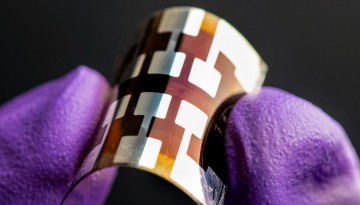
By finding the atomic equivalent of a perfect handshake between two types of perovskite, researchers at Cornell have built solar cells that are not only high-performing, but exceptionally durable.
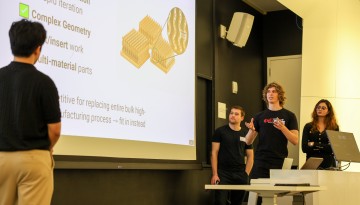
From a nanotech solution for removing toxic chemicals from water to a 3D-printing method for high-precision drug delivery, Cornell students put research innovations to the test in the first Technology Commercialization Innovation Competition.
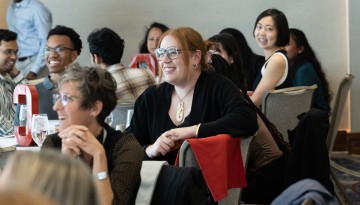
The Cornell Engineering Office of Inclusive Excellence recognized outstanding undergraduate and graduate students, student organizations, faculty and staff at their Annual Awards Banquet on April 28.
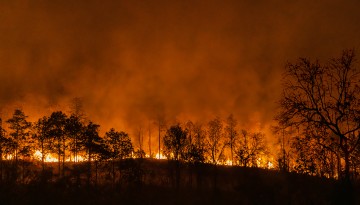
Cornell researchers created a machine learning-based model that can forecast, with greater accuracy than current methods, the impact severe wildfire conditions will have on solar electricity generation.
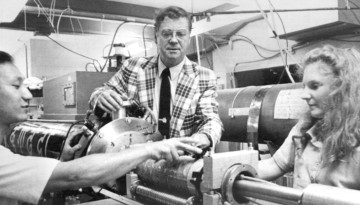
Charles “Chuck” Benjamin Wharton, professor emeritus of electrical engineering and a distinguished expert in plasma physics, died April 12 in Ithaca, New York. He was 99.