A new study reveals that Italy’s Po River basin is likely to face intensifying drought conditions, with annual river discharge at the basin outlet projected to decrease substantially over the next 75 years.
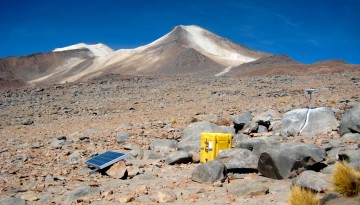
Researchers identified a likely source of activity in a “zombie” volcano that appeared to be dormant for more than 250,000 years: molten rock releasing gas that pushes against the volcano’s upper crust.
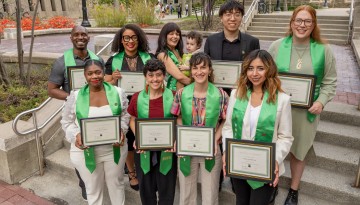
Nine doctoral candidates were inducted into the Cornell Chapter of the Bouchet Graduate Honor Society, which recognizes scholarly achievement and promotes diversity in doctoral education.
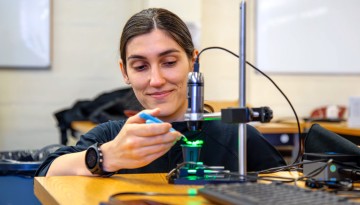
Regional high school students engineered bath bombs, extracted DNA from fruit and learned about the college application process as part of the Women’s Outreach in Material, Energy, and Nanobiotechnology event hosted by the Chemical and Biomolecular Engineering Graduate Women’s Group.
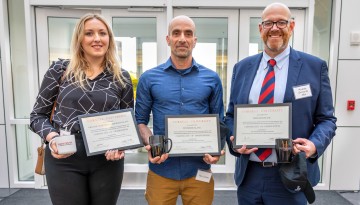
Cornell’s incubator Class of 2025, composed of startups Llume, Meiogenix and TETmedical, is advancing innovations in human performance monitoring, non-GMO plant breeding and neurological critical care.
The 2025 Cornell Energy Summit: “The Energy Landscape: Meeting Global Needs in the Age of Sustainability” will be held on April 30, 8 a.m. to 4 p.m. in the Statler Hotel Ballroom.
Sionic Energy, a leader in electrolyte and silicon battery technology, has been awarded a $200,000 SuperBoost grant from the NSF Energy Storage Engine in Upstate New York.