Because of their scholarly accomplishments and commitment to advancing global knowledge about communication, professors Lee Humphreys '99 and Jeff Niederdeppe have been elected as Fellows in the International Communication Association.
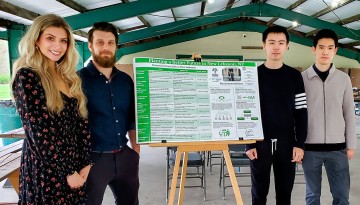
Master’s students are helping New Lebanon, New York expand its economy with green technology jobs, and drafting a blueprint for similar communities statewide.
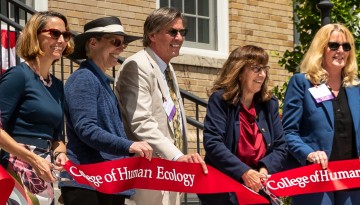
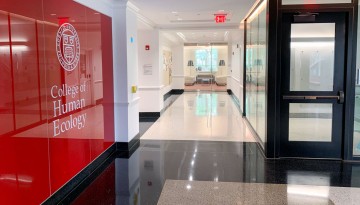
A June 10 rededication and ribbon-cutting ceremony will celebrate the completion of renovations to Martha Van Rensselaer Hall, Cornell’s first facility recognized for inclusive design as part of its LEED Gold certification.
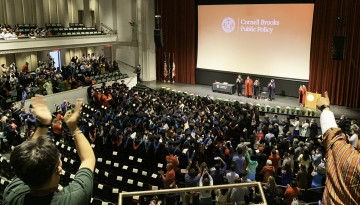
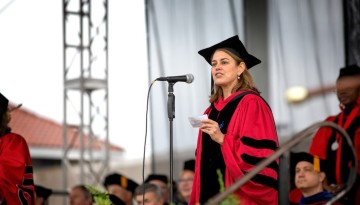
The first John Siliciano Award recipients from the Cornell Jeb E. Brooks School of Public Policy were honored at the school's first commencement, held in Bailey Hall. The annual award for academic accomplishment and leadership award honors a key Cornell leader in the establishment of the public policy school.
From the traditional procession on the Arts Quad to the final champagne toast on the Bailey Hall Plaza, the first Cornell Jeb E. Brooks School of Public Policy commencement day was an historic occasion. Dean Colleen L. Barry celebrated the graduates as she introduced the Class of 2022 at the Schoellkopf Field ceremony and then honored them in her commencement address at Bailey Hall.
Police bills of rights have been a legislative priority for police unions since the 1980s and, according to the National Urban League, they have been adopted by 19 states.
Sloan Program in Health Administration students will be working with five executives-in-residence. Sloan Program Associate Director Julie Carmalt says the students will have a range of mentoring and networking opportunities while learning from prominent leaders in the health care field.
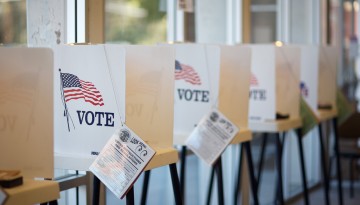
A new and uniquely constructed survey of American voters finds glimmers of hope that Democrats and Republicans can agree on steps needed to shore up an increasingly shaky democracy.