Professor emeritus Thomas O’Rourke was honored July 14 with the inaugural Cornell Program in Infrastructure Policy Award for his research, teaching, and consulting services to more than 140 projects in 13 countries.
Extreme heat threatens to reverse progress made in combating early child malnutrition as the planet continues to warm, according to Cornell research focused on five West African nations.
Once used as a tool for constitutional reform, Congress has repurposed Article V of the U.S. Constitution into a mechanism for taking positions on issues, according to new Cornell research.
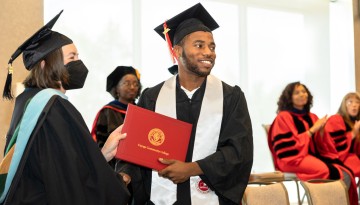
In a July 10 ceremony at the Statler Hotel, the Cornell Prison Education Program honored graduates released since the start of the pandemic, which curtailed prison-based commencements.
Dr. Zubaida Qazi is earning an executive master’s in health administration in the Cornell Brooks School to enhance breast cancer prevention through her NGO, Pink Pakistan Trust.
Top private and public sector leaders, academics, experts, and practitioners will meet for a workshop at Cornell Tech focusing on new methods of infrastructure delivery. The issue is especially timely because of the $1.2 trillion infrastructure bill signed into law by President Biden.
The National Science Foundation has awarded Cornell $2 million to oversee the first federally funded midterm election survey in 20 years, engaging multiple partners and diverse methodologies.