Thomas Pepinsky, an expert on economic policy at Cornell University, discusses President Donald Trump’s decision to halt funding to the World Health Organization, and his new research: Democrats are much more likely to take active steps to combat the spread of COVID-19.
Cornell students in Ithaca and across the country can now access an expanded range of medical and mental health services from Cornell Health through telehealth, including video appointments conducted on a secure portal.
Online events and Cornell resources include a choral music listening party, a staff community chat, student work from Rome, gardening classes for kids, and virtual auditions for a fall production of “How I Learned to Drive.”
Economist Robert H. Frank discusses how COVID-19 will impact economic policy, such as public investments in medical research and hospital surge capacity.
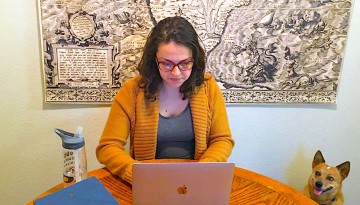
To ease the transition to remote learning, Cornell University Library in early April began loaning out laptops to students who need them; the loans are for the spring semester, with the possibility of renewal.
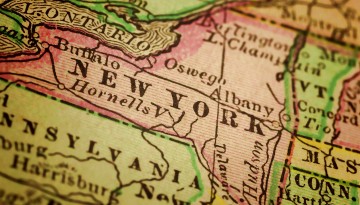
Rural counties in upstate New York are likely to be the state’s most vulnerable to a COVID-19 outbreak that could strain local health care infrastructure, according to an analysis by Cornell demographers.
A research tracker created by Nathan Matias, assistant professor of communication, has helped foster collaboration among social scientists responding to the COVID-19 pandemic.
Students in the Samuel Curtis Johnson Graduate School of Management have found fun, interesting and valuable ways to make the most of physical distancing by creating new ways to engage.
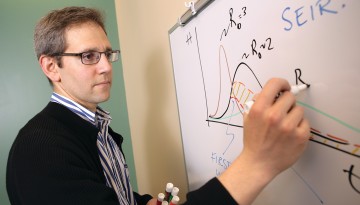
Mathematical modeling by Weill Cornell Medicine is helping to guide New York state and New York City leaders as they make decisions that could affect the trajectory of the COVID-19 pandemic.