Cornell researchers have discovered that a lethal variant of feline coronavirus, previously thought to be limited to a devastating 2023 outbreak in Cyprus that killed thousands of cats, has in fact appeared in the United States, raising concerns about future large-scale outbreaks in vulnerable cat populations.
Scholars converged at Cornell to talk about lessons policymakers and elected officials could glean from their research into the COVID pandemic to help deal with the next public health emergency.
New York City’s mostly indoor cats easily caught SARS-CoV-2 during the first wave of the COVID-19 epidemic – and most were asymptomatic and were likely infected by their owners.
A Nov. 13 event sponsored by the College of Arts and Sciences will feature reflections on the political and social context and consequences of the COVID epidemic.
The Rapid Response Fund was designed to have a streamlined review process that enables researchers to access funding within weeks — ideal for fast-moving infectious diseases.
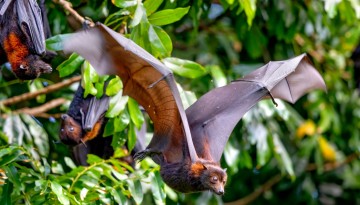
Juvenile and subadult bats may be the most likely to spread new coronaviruses to other species, according to a new Cornell study from the College of Veterinary Medicine.
Researchers have created a computer model that can help produce farms and food processing facilities control COVID-19 outbreaks, keeping workers safe and the food chain secure.
Pregnancy may offer some protection from developing long COVID, found a new study led by Weill Cornell Medicine, University of Rochester Medical Center, University of Utah Health and Louisiana Public Health Institute.
Most pandemics in the past century were sparked by a pathogen jumping from animals to humans. This moment of zoonotic spillover is the focus of a multidisciplinary team of researchers led by Raina Plowright, the Rudolf J. and Katharine L. Steffen Professor in the Cornell College of Veterinary Medicine’s Department of Public and Ecosystem Health.