Cornell is a global leader in sustainability and climate change research, teaching and engagement. Our campuses are living laboratories for developing, testing and implementing solutions that address these most challenging issues.
Lasers match common herbicides at zapping East Coast weeds

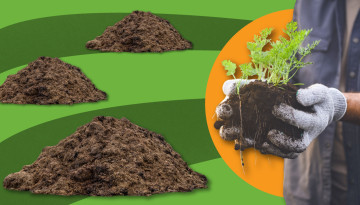
The study found that the laser weeders worked as well as common herbicides in test plots of East Coast peas, beets and spinach.

To slow global warming, bury wood debris

Researchers project that burying the wood debris from managed forests could reduce global warming up to 0.76 degrees Fahrenheit by 2100.

Program seeks NYS volunteers to track wildlife with trail cameras

Snapshot NY aims to collect widespread data about animal populations throughout New York state - using thousands of trail cameras - and is engaging the public to aid the effort. 

Plants use 'weather radar' to sense temperature

For decades, researchers searched for a single “thermosensor”—a biological thermometer buried deep in the plant’s molecular machinery. But a new theory, led by Avilash Singh Yadav, postdoctoral associate at the Weill Institute for Cell and Molecular Biology and the Cornell College of Agriculture and Life Sciences, is flipping that idea on its head.  

Around Cornell

New approach models potential and trade-offs of floating solar

Researchers project significant energy gains from using floating solar on just 3.5% of waterbodies in the Northeastern U.S., even with approaches that preserve biodiversity and recreation.

Professors address climate change from multiple disciplines

The June 6 panel, "Beyond the Apocalypse: New Narratives and Innovations for Climate Action," took place during Reunion 2025.

Around Cornell

Cornell Atkinson awards catalyze solutions in food, climate, clean energy

Atkinson Venture Fund awards have distributed $21.7 million to 223 projects spanning every college on Cornell’s campus over 15 years.

Biodiversity allows for sustainable fisheries, better nutrition

To satisfy the seafood needs of billions of people, offering them access to a more biodiverse array of fish creates opportunities to mix-and-match species to obtain better nutrition from smaller portions of fish.

Electric buses don’t like the cold, study finds

In collaboration with Tompkins Consolidated Area Transit, researchers found that a pilot fleet of seven electric buses consumed up to 48% more energy in cold weather.