The collaboration will support cross-institutional scientific partnerships between students and faculty at Cornell and N.C. A&T, a historically Black university that produces more African American engineers than any other university in the United States.
New research from the College of Engineering aims to ease the process of chemical recycling – an emerging industry that could turn waste products back into natural resources by physically breaking plastic down into the smaller molecules it was originally produced from.
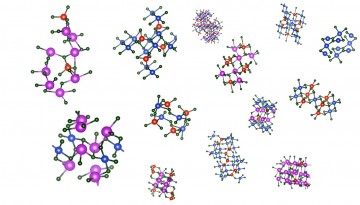
A collaboration of researchers led by Cornell has been awarded $22.5 million from the National Science Foundation to continue gaining the fundamental understanding needed to transform the brightness of electron beams available to science, medicine and industry.
An interdisciplinary research team led by Carla Gomes, professor of computing and information science, has developed Deep Reasoning Networks, which combine deep learning with an understanding of the subject’s boundaries and rules.
Researchers developed an algorithm that shows just how much more effective Spotify would be if it incorporated both likes and dislikes, in the style of platforms like Pandora.
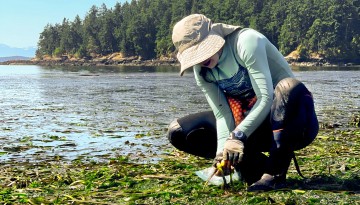
Cornell-led scientists aim to resolve a wasting disease afflicting seagrass – the ocean’s critical first line of coastal filters – with a $2.5 million National Science Foundation grant.
Cornell researchers and students are poised to help shed light on the history of St. James A.M.E. Zion Church, the world’s oldest active A.M.E. Zion Church.
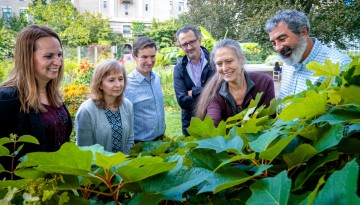
The new Center for Research on Programmable Plant Systems, or CROPPS, funded by a five-year, $25 million National Science Foundation grant, aims to grow a new field called digital biology.
Neighborhoods that had populations with predominantly longer commute times to work – from about 40 minutes to an hour – were more likely to become infectious disease hotspots, according to new research.