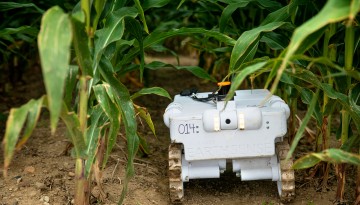
Besides a stray feline Roomba, very few people are investing energy into putting clothes on robots. Researchers from Cornell Tech and NYU say that now’s the time to think more actively about when, how and why we would dress them
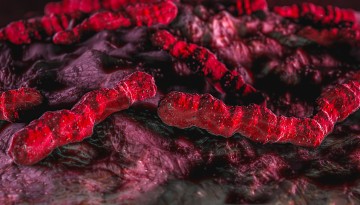
Cornell researchers “humanized” mice with microbiota from three global populations and found that microbial differences alone can impact immune responses.
Honeybees are skilled architects who plan ahead and solve design challenges when constructing honeycombs, offering strategies that engineers may learn from when they use honeycomb structures in industry.
The Samuel Curtis Johnson Graduate School of Management is announcing a new BioEntrepreneurship Initiative to connect MBA students and life science researchers to life science companies in NYS while catalyzing the formation of new life science startups.
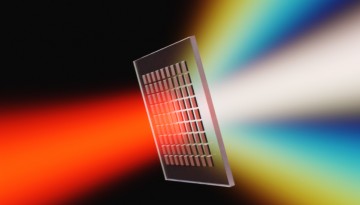
Cornell researchers have developed nanostructures that enable record-breaking conversion of laser pulses into high-harmonic generation, paving the way for new scientific tools for high-resolution imaging.
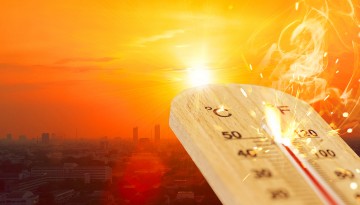
After stifling temperatures parked over the Pacific Northwest in late June, scientists – including Cornell’s Flavio Lehner – said climate change triggered it.
A Cornell-led team has used transdisciplinary systems modeling to calculate the future health benefits of vehicle electrification, driverless cars and ride-sharing in the United States.
David Hysell, Ph.D. ’92, professor in the Department of Earth and Atmospheric Sciences, is using NSF funding to develop radar tools and techniques for monitoring space weather, including the creation of a new radar system at Cornell.