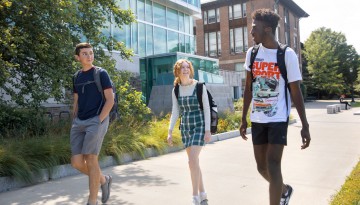
Cornell’s seven-week Prefreshman Summer Program offers new students the opportunity to learn more about the university and its resources before they start their first year on East Hill.
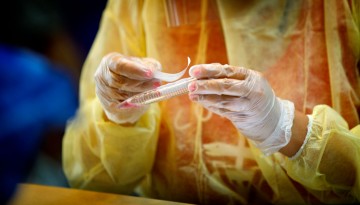
Models developed by university experts predict that the combination of a highly vaccinated campus population and public safety measures, including masks and testing, will minimize the risk of virus spread this fall.
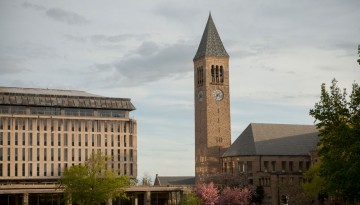
When Cornell’s COVID-19 Modeling Team began developing protocols for the return to campus, they turned to Cornell librarians to comprehensively answer a series of rapidly evolving – and critically important – questions.
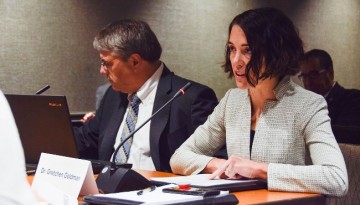
Goldman began the job in July and will serve a one-year term while on sabbatical from the Union of Concerned Scientists, where she is the research director for the Center for Science and Democracy.
Cornell researchers and their collaborators will continue to advance quantum science and technology thanks to $5.4 million in new funding from the U.S. Department of Energy to support two projects.
‘Blue hydrogen – made by using methane in natural gas – is lauded a clean, Cornell and Stanford researchers believe it may harm the climate more than burning fossil fuel.
Cornell researchers are proposing a new way to modulate both the absorptive and the refractive qualities of metamaterials in real time, and their findings open intriguing new opportunities.
An international group of scientists now say that reflections of the Mars’ south pole may be smectite, a form of hydrated clay, buried about a mile below the surface.