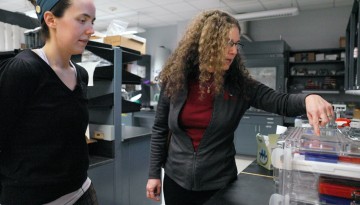
An interdisciplinary collaboration used a materials science approach to “fingerprint” calcium mineral deposits that reveal pathological clues to the progression of breast cancer and potentially other diseases.
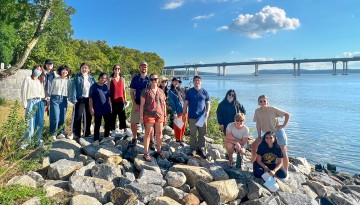
As sea levels rise over the next decades for low-lying Hudson River towns, Cornell landscape architecture students offered ideas for coping with climate change and embracing the water.
Assistant professor Amal El-Ghazaly received an NSF CAREER Award for research that could ultimately make next-generation wireless systems more accessible worldwide.
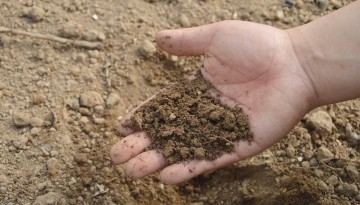
Assistant professor Matthew Reid received an NSF CAREER Award to research how carbon can be transformed in the environment to create fuel for nitrogen-consuming bacteria, ultimately reducing nutrient pollution.
A pair of researchers in the Department of Neurobiology and Behavior are designing new technology and research methods to discover how brain circuits support learning and memory.
The Cornell chapter of the National Society of Black Engineers is celebrating Black History Month with a variety of events expected to be well attended thanks to the student organization’s recent efforts to boost membership and revitalize its programming.
Students, faculty and administrators have quickly mobilized relief efforts and support for those affected by the 7.8-magnitude earthquake that devastated Syria and Turkey.