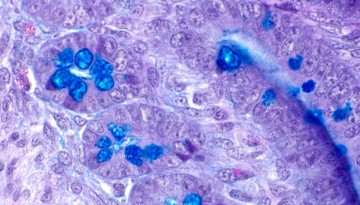
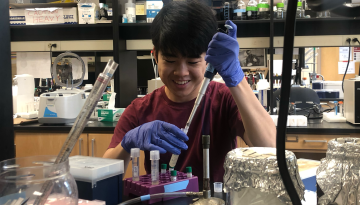
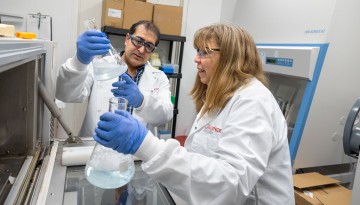
Metal oxide nanoparticles – commonly used as food coloring and anti-caking agents in commercial ingredients – may damage parts of the human intestine, say Cornell and Binghamton University scientists.
New York Lt. Gov. Antonio Delgado engaged with students and faculty on topics ranging from biological engineering to nutrition to 4-H programs during his first tour of the Ithaca campus on Feb. 2.
A new study finds that nest boxes of commercial eastern common bumblebees (Bombus impatiens) lead to the deaths of wild queens who are attracted to the brightly colored hives.
A summer internship in sustainable agriculture and food systems enables undergrads from Cornell and across the country to work on a USDA-funded project focused on making policy more nutritious and sustainable.
Four next-generation scholars have been chosen as Cornell Atkinson Postdoctoral Fellows, forwarding projects focused on food security, energy transitions, One Health and climate change.
Cornell will teach small farmers in India – the world’s largest dairy producer – how to produce milk more efficiently while limiting greenhouse gas emissions.
Forte Protein – a new Cornell startup that grows commercial animal proteins inside agricultural plants – has joined the university’s Center for Life Science Ventures business incubator.