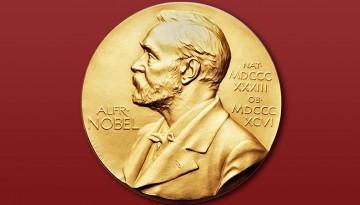
Arthur Ashkin, Ph.D. '52, whose invention of optical tweezers revolutionized the way scientists can study and manipulate biological systems, has won a share of this year's Nobel Prize in physics.
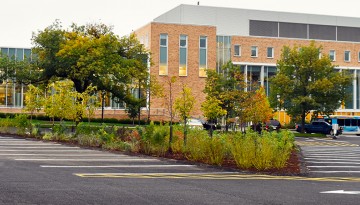
Lace up your walking shoes and head to Cornell’s new Sustainable Landscapes Trail, which opens with a ceremony Friday, Oct. 5, at 2 p.m., at the parking lot across from the Dairy Bar on Tower Road.
A new project received a $100,000 planning grant from the NSF to create a proposal for an Engineering Research Center for sustainable energy-smart solutions.
The atomic makeup of a catalyst makes a big difference in its properties, according to new research from the lab of Jin Suntivich in materials science and engineering.
Satellite images revealing an Arctic ice cap destabilizing at “unexpected and unprecedented” speed have scientists questioning the stability of some polar ice caps.
Mobile dating apps that allow users to filter their searches by race – or rely on algorithms that pair up people of the same race – reinforce racial divisions and biases, according to a new paper by Cornell researchers.
On Sept. 21-22, more than 12,000 alumni, parents, faculty, staff and students members enjoyed Homecoming traditions, including the Big Red Fan Festival.