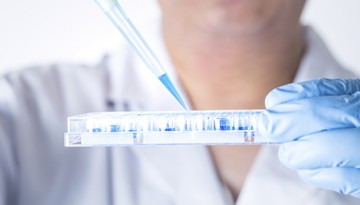
Veterinary medicine researchers have found that stem cells inside capsules secrete substances that help heal simulated wounds in cell cultures. The capsules need to be tested to see if they will help healing in humans.
Splash! at Cornell on April 18 will offer more than 100 courses for middle and high school students in one day, all taught by Cornell students - everything from hip-hop to history.
Zhiming Shen, a doctoral candidate in the Department of Computer Science, has received a 2015 IBM Ph.D. Fellowship Award to support his research in cloud computing.
Chemical engineers have developed a new method for making large quantities of integral membrane proteins simply and inexpensively, without the use of detergents typically used today.
Women make up 39 percent of Cornell's engineering undergraduates – almost twice the national average, according to a National Science Foundation report. The report also found Cornell has made strides with underrepresented groups in science.
Cornell University Center for the Integration of Research, Teaching and Learning received a $130,000 grant to prepare future STEM faculty to be great researchers and teachers.
A Facebook fellowship will support graduate student Chenhao Tan's research in human-computer interaction and human behavior in social media for two years.
Cornell’s recently expanded student winery is preparing students for the future of the wine industry. Viticulture and enology students use the facility to explore regional winemaking challenges.
As part of the Cornell GK-12 Grass Roots program, four Cornell graduate students and two local teachers traveled to India to exchange best practices in science education with Indian schoolteachers.