Twenty seniors in the Milstein Program in Technology & Humanity will graduate this year with degrees in everything from biology to linguistics to computer science to physics.
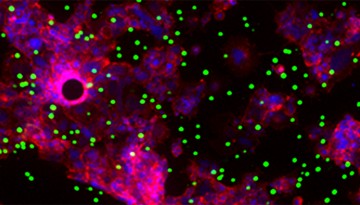
The Weill Cornell Medicine research takes a step toward precision medicine for a type of cancer that disproportionately affects people with African ancestry, an underserved population.
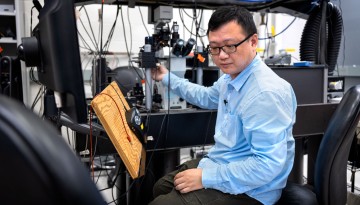
Cornell researchers designed a micro-sized artificial cilial system that could eventually enable low-cost, portable diagnostic devices for testing blood samples, manipulating cells or assisting in microfabrication processes.
Cornell startup Antithesis Foods and Bactana were awarded NSF small-business grants, as Guard Medical raises $11 million in Series B investments and C2i launches a disease test in Europe.
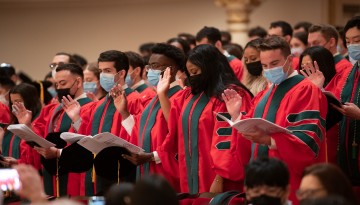
President Martha E. Pollack joined Deans Augustine M.K. Choi and Barbara Hempstead in conferring degrees on students graduating from Weill Cornell Medical College and Weill Cornell Graduate School of Medical Sciences, in the first in-person ceremony since the beginning of the COVID-19 pandemic.
Through their work on the dynamics of liquid mixtures, scientists have developed a new approach to the problem of cleaning sensitive, electronic surfaces.
Robust collaboration between community partners and Cornell has resulted in more than 2 million COVID-19 tests, saving lives throughout the Finger Lakes region.
Charles R. Lee was one of the university’s most active and generous ambassadors, and a tireless advocate for deeper connections across Cornell’s campuses and alumni communities.
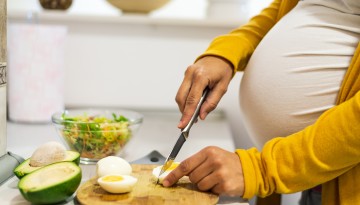
The nutrient choline – shown to have long-term benefits for children whose mothers consume it during pregnancy – also helps the body more efficiently use an omega 3 fatty acid that is essential for fetal development.