Cornell professor Jamila Michener testified March 29 before a congressional committee that universal health insurance coverage would not only address health inequities among people of color, but strengthen the U.S. democracy.
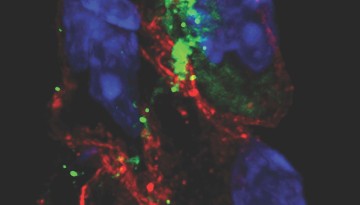
The SARS-CoV-2 virus can infect specialized pacemaker cells that maintain the heart’s rhythmic beat, setting off a self-destruction process within the cells, according to a preclinical study co-led by researchers at Weill Cornell Medicine, NewYork-Presbyterian and NYU Grossman School of Medicine.
A study of more than 11,000 adolescents found that taxes on soda reduce consumption by boys but not girls, according to new research collaborated on by economics professor John Cawley.
Cannabis employers see lack of training and skills, as well as lack of awareness of career opportunities, as two of the largest obstacles to achieving social equity in the adult-use market.
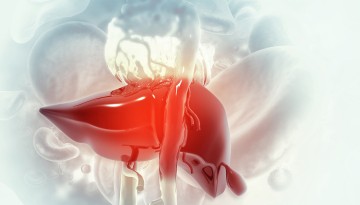
Researchers at Weill Cornell Medicine have identified a key protein that induces the program to build specialized liver blood vessels. The discovery could lead to engineered replacement hepatic tissue to treat common liver diseases.
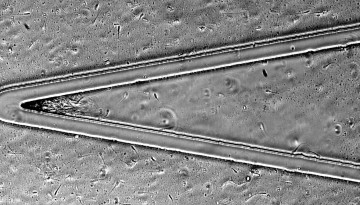
Forget sending bull semen out for complicated laboratory tests to learn whether the agricultural animal is virile. Cornell scientists have developed a faster, easier microfluidics method.
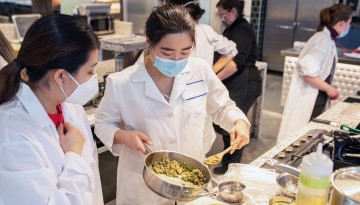
Students are now taking classes the Discovery Kitchen, a state-of-the-art teaching space built into the ground floor of Toni Morrison Hall on North Campus.
Booster doses of mRNA vaccines provided strong protection against hospitalization and death from COVID-19 in Qatar, according to a study by investigators at Weill Cornell Medicine – Qatar.
A Cornell-designed probe shows how water vapor penetrates powders and grains – a finding that could have wide-ranging applications in pharmaceutical research, agriculture and food processing, and planetary exploration.